
Share this
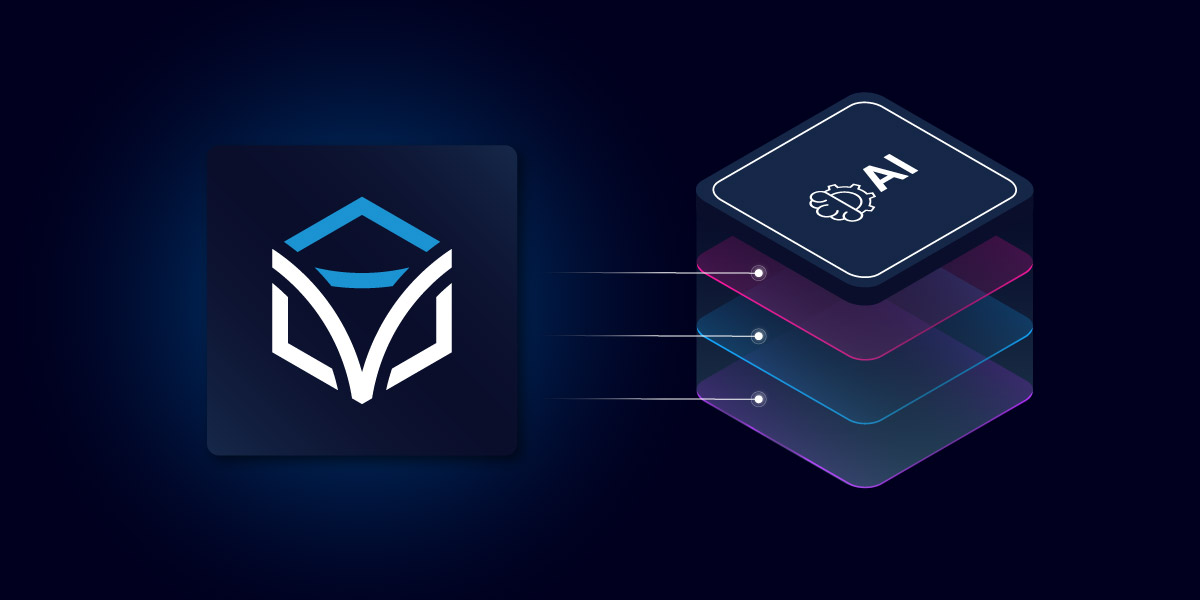
Table of Contents
- tldr;
- The Foundation: Understanding Itential’s AI Architecture Philosophy
- Phase 1: Pure Experimentation (Human IN the Loop)
- Phase 2: Platform Integration with MCP (Human IN to ON the Loop)
- Phase 3: Purpose-Built Agents with FlowAgent Builder (Human ON the Loop)
- Phase 4: Agent-to-Agent Coordination with FlowAI (Human ON the Loop)
- Phase 5: Autonomous Operations with Infrastructure AI Orchestration (Human OUT of the Loop)
- Journey Phase Technology Mapping Summary
- Conclusion: A Governed Path from Experimentation to Autonomy
- Frequently Asked Questions
tldr;
Learn how to take AI in infrastructure from basic experimentation into practical, governed integrations with real systems, build and deploy purpose‑built agents with Itential’s tools, orchestrate multi‑agent workflows, and ultimately enable autonomous, enterprise‑safe operations.
Itential has built a comprehensive technology stack that enables enterprises to progress through every phase of the AI-driven infrastructure journey – from experimentation with LLMs to fully autonomous operations. The platform’s architecture deliberately separates AI reasoning from infrastructure execution, ensuring that as organizations advance through each phase, security, governance, and auditability remain constant.

For a deep dive on the 5-phase framework moving from AI experimentation to autonomous operations, check out this guide.
The Foundation: Understanding Itential’s AI Architecture Philosophy
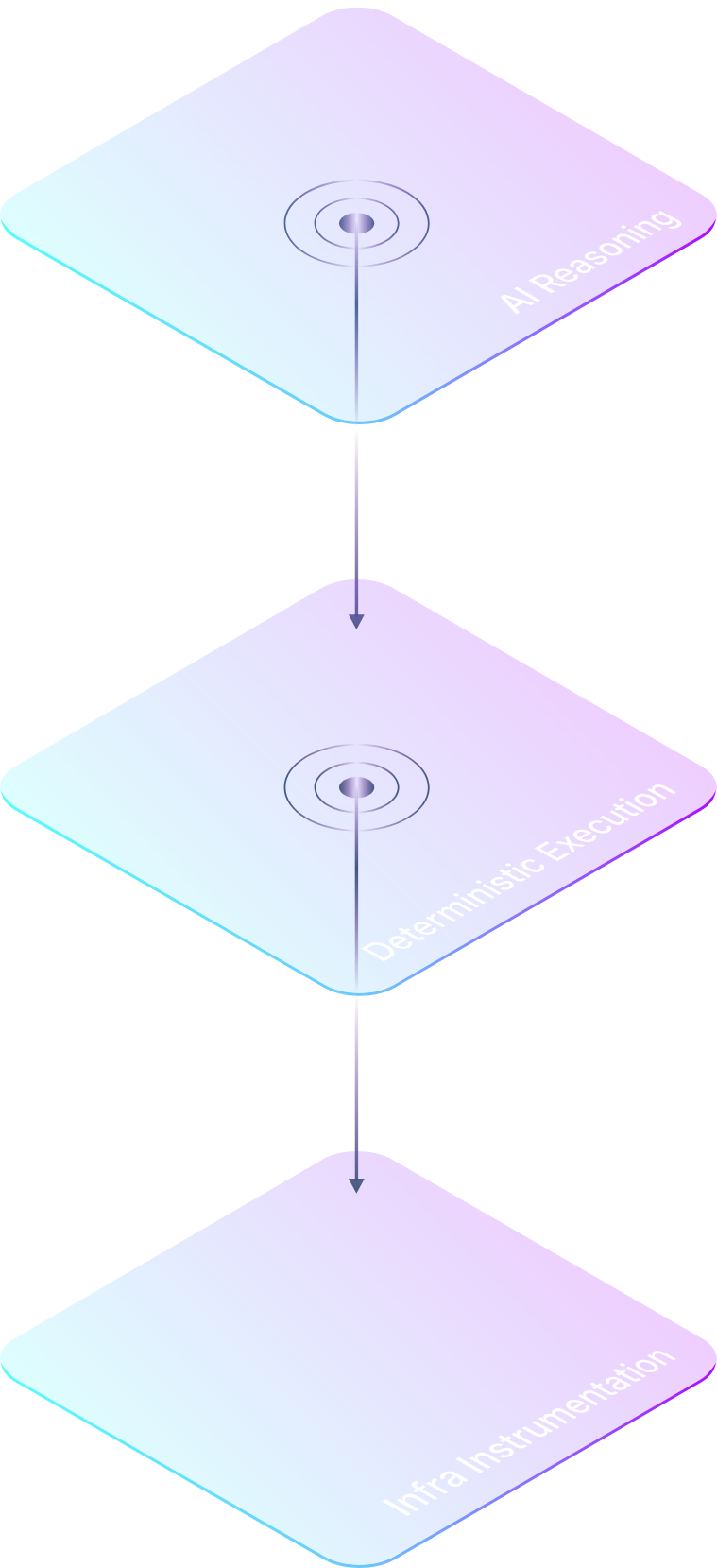
Itential’s approach to AI-driven infrastructure rests on a critical architectural principle: platform executes, AI reasons. This separation enables the AI-to-Action loop – a governed pathway where AI intent is validated, translated, and executed through deterministic workflows. The architecture comprises three distinct layers working in concert.
The AI Reasoning Layer (FlowAgents and FlowAgent Builder) interprets intent, evaluates operational state, and generates plans. The Deterministic Execution Layer (Itential Platform workflows and tooling) validates actions against schemas and policies, enforces permissions, and executes with full auditability. The Infrastructure Instrumentation Layer (Itential Platform Integration Framework, Itential Automation Gateway and FlowMCP Gateway) provides controlled, observable access to human (CLI) and programmable interfaces across multi-vendor environments.
This model ensures that as customers move from human-in-the-loop to human-out-of-the-loop operations, they maintain enterprise-grade control. Every AI action flows through the platform’s hardened control plane where RBAC, SSO, and audit frameworks govern execution.
Phase 1: Pure Experimentation (Human IN the Loop)
Organizations begin their AI journey through unstructured exploration using general-purpose AI tools without any platform integration. Teams copy configurations into ChatGPT to understand syntax, ask Claude to explain cryptic error messages, use AI to decode vendor documentation, and explore design patterns through conversational prompts. This experimentation phase builds organizational AI literacy – engineers discover what AI can and cannot do, develop effective prompting skills, and identify genuine value versus risk. No Itential products are involved; this is foundational learning with tools teams already access.
Learning Through Experimentation
Engineers quickly learn which questions AI answers reliably versus where it hallucinates or provides incorrect information. Simple explanatory questions work well – “What does this configuration do?” or “What commands list all pods in Kubernetes?” – while questions requiring precise vendor-specific syntax or current infrastructure state often produce unreliable results. Teams discover AI excels at pattern recognition, conceptual explanation, code structure analysis, script creation, and documentation generation but struggles with precise technical details requiring real-time infrastructure knowledge or vendor-specific implementation nuances.
Through trial and error, teams develop prompt engineering intuitions. They learn to provide context, structure multi-step problems clearly, and maintain conversational threads that build on previous exchanges. Copying an entire configuration with a specific question produces better results than vague general questions. Asking AI to “explain step-by-step” for troubleshooting or “compare these two approaches” for design decisions becomes standard practice.
Confidence & Identifying Integration Value
This phase serves a critical function: teams develop confidence that AI genuinely augments their expertise rather than replaces it. Engineers stop viewing AI as either magical solution or useless toy, understanding it as a powerful but imperfect tool requiring human judgment. Organizations categorize where AI provides operational value – configuration analysis and templating, translating between vendor syntaxes, troubleshooting guidance, protocol explanation, documentation generation – versus where it introduces risk through hallucinated syntax or incorrect vendor-specific details.
Most importantly, teams identify concrete use cases where connecting AI to their Itential Platform would multiply value: “If AI could query our actual infrastructure inventory…” or “Imagine if AI could trigger our provisioning workflows…” This sets the stage for Phase 2 integration.
Phase 1 Outcome
- Teams develop foundational AI literacy with realistic expectations about capabilities and limitations.
- Engineers gain comfort with conversational AI interfaces and effective prompting techniques.
- Organizations identify high-value integration use cases and build the confidence necessary to evaluate AI technologies critically for platform integration in subsequent phases.
Phase 2: Platform Integration with MCP (Human IN to ON the Loop)
Organizations take their first step toward structured AI-infrastructure integration by installing itential-mcp to connect LLMs to their Itential Platform. AI agents transition from answering questions based on training data to querying real infrastructure – discovering managed devices, exploring available workflows, and understanding actual automation capabilities. This phase maintains strict human control: AI can query and propose, but every action requiring infrastructure changes demands explicit human approval. This creates the foundation for governed AI operations where agents work with real operational data while humans retain decision authority.
Connecting AI to Infrastructure with Governance
itential-mcp (Itential MCP Server) is an open-source component implementing Anthropic’s Model Context Protocol, available via PyPI (pip install itential-mcp) or Docker container. It creates a secure bridge between AI reasoning and enterprise automation by dynamically registering Itential Platform capabilities as discoverable MCP tools that AI agents can invoke – workflows for orchestration triggers, Configuration Manager for compliance jobs, Lifecycle Manager for Stateful resource management and Day 2 operations, and Automation Gateway for scripts, playbooks, and infrastructure-as-code automations.
Engineers immediately gain new capabilities by asking agents questions requiring real platform knowledge. “Is the Itential platform healthy?” queries actual system status. “Show me all devices managed by Itential” returns current inventory. “What infrastructure automation workflows are available?” discovers permitted workflows. “Show me the routing table on device linux-vm01” retrieves command outputs from onboarded nodes. Every answer flows through itential-mcp’s governance layer – agents never access infrastructure directly, only through validated platform APIs with full audit trails.
Enterprise Security & Client Support
itential-mcp supports any MCP-compliant AI client including Claude Desktop, ChatGPT, Google Gemini, N8N, OpenAI AgentKit, custom agents, and AIOps platforms. Organizations choose clients based on workflow preferences and existing investments. Enterprise security controls apply fully from day one: OAuth for identity integration, JWT for stateless authentication, and RBAC enforcing least privilege – agents inherit permissions of their user or service account. Tag-based filtering controls which capabilities agents discover with every request logged, schema-validated, and traceable through audit trails.
Phase 2 Outcome
- Organizations prove AI can safely interact with production infrastructure through governed pathways.
- Teams move beyond theoretical discussions to practical experience with AI querying real devices, proposing workflow executions, and working with live operational data.
- Engineers identify concrete use cases where purpose-built agents with deeper domain expertise would multiply operational value, setting the stage for Phase 3 specialization.
Phase 3: Purpose-Built Agents with FlowAgent Builder (Human ON the Loop)
Organizations move beyond general-purpose AI interactions to deploying specialized agents with deep domain expertise. FlowAgent Builder – an application within the Itential Platform – enables creation of governed, role-based agents with defined purposes and constrained toolsets, transforming the approach from “ask Claude anything” to “deploy specialized experts” that handle specific operational domains.
Building Purpose-Built Agents
Agent creation follows a structured four-step process. Create a Project to define the security boundary – which workflows, APIs, and Gateway services the agent can access. Build agent tools by creating workflows that become executable functions, each implementing deterministic logic for specific use cases (VM deployment, port provisioning, device upgrades) through API calls, SSH/CLI connections, or Python scripts. Define agent configuration including system prompt for personality and context, user prompt for specific instructions, project assignment, and LLM provider settings. Deploy and run the agent with all actions tracked in “Missions” that capture message logs, tool calls, and reasoning chains.
Specialist Agent Patterns
Organizations deploy agents for specific operational domains. A Compliance Checker validates infrastructure configurations against regulatory frameworks (PCI-DSS, HIPAA, SOC2), identifying deviations and proposing remediation. A Troubleshooting Agent reasons through error logs and command outputs to pinpoint root causes across network, server, and application layers, integrating with ticketing systems for incident response. A Cloud Operations Agent provisions AWS VPCs end-to-end, allocates subnets from IPAM, configures security groups, and sends notifications with deployment results. A Server Lifecycle Agent manages OS patching, validates configurations against baselines, and executes upgrade workflows with automated rollback on failure.
Governance by Design
FlowAgents operate under strict architectural constraints. They never execute changes directly – all execution flows through governed workflows. Agents are bounded by assigned project scope, limited to defined toolsets, with all outputs passing through validation layers and RBAC controls. Mission logs provide complete visibility into reasoning paths and tool calls for audit and compliance review.
Phase 3 Outcome
- Organizations deploy multiple specialist agents handling routine operational tasks with minimal human intervention.
- Humans monitor agent decisions rather than executing every action manually.
- Trust expands as agents prove reliability in constrained domains, setting the stage for agent coordination in Phase 4.
Phase 4: Agent-to-Agent Coordination with FlowAI (Human ON the Loop)
Organizations mature beyond single-purpose agents to deploy composable agent ecosystems where agents communicate directly with other agents. FlowAI enables this without central orchestration – agents autonomously decide when they need help and invoke appropriate specialists through secure, governed channels. A provisioning agent calls the ServiceNow agent for tickets, the Communication agent for notifications, or domain experts for validation, creating agent capabilities that compose across complex, cross-domain workflows.
Utility Agents & Collaboration Patterns
Organizations deploy general-purpose utility agents providing reusable capabilities. The ServiceNow agent handles ITSM interactions: creating change requests, checking approvals, managing incidents, updating CMDB entries. Communication agents manage notifications via Slack, email, and Teams with templating and rich formatting. Compliance agents validate configurations against policies. These utility agents become organizational infrastructure – every specialized agent leverages them without reimplementing common functionality.
Consider an infrastructure provisioning request: The Provisioning agent calls the ServiceNow agent to create a change request, invokes the IPAM agent to allocate IP addresses and the Compliance agent to validate security policies. With approvals confirmed, it executes provisioning workflows – deploying VMs, configuring networks, installing monitoring. Upon completion, it calls ServiceNow to close the change request and invokes the Communication agent to notify stakeholders. Each agent operates autonomously within its scope, communicating through well-defined interfaces.
Governance & Infrastructure
Itential FlowAI Framework provides the enterprise infrastructure supporting agent-to-agent communication at scale: multi-tenancy for isolated team ecosystems, agent registry cataloging capabilities, RBAC enforcing invocation permissions, and complete audit trails. Every agent-to-agent call requires authorization, with comprehensive logging capturing full context. All agent actions flow through Itential’s deterministic execution layer with schema validation and policy enforcement – agents calling other agents operate under the same governed pathways as any platform interaction.
Phase 4 Outcome
- Organizations build composable agent ecosystems where specialized agents leverage utility agents for cross-cutting concerns.
- Complex workflows spanning multiple domains execute seamlessly through agent collaboration without central orchestration.
- Development teams build new agents faster by reusing existing utility agents rather than rebuilding capabilities from scratch.
Phase 5: Autonomous Operations with Infrastructure AI Orchestration (Human OUT of the Loop)
Organizations achieve closed-loop automation by combining all previous capabilities into a comprehensive orchestration framework. FlowAI agents coordinate autonomously to detect issues, reason through solutions, validate against policies, execute remediation, and verify results – with humans shifting to strategic oversight rather than operational execution. This phase leverages the complete platform stack: FlowAI for agent construction and coordination, FlowMCP Gateway for integration with external infrastructure MCPs, FlowMCP for exposing Itential capabilities to external AI systems, Automation Gateway for script and playbook execution, and enterprise governance through Projects, RBAC, and comprehensive audit trails.
Bidirectional Orchestration Architecture
Itential operates as the central orchestration hub connecting distributed AI systems bidirectionally. Southbound, FlowMCP Gateway enables FlowAgents to invoke external infrastructure MCP servers – NetBox for source-of-truth data, vendor-specific MCPs for equipment management, observability platforms for telemetry, cloud provider MCPs for resource management. These external MCPs connect through Automation Gateway’s execution framework for scripts, Ansible playbooks, REST APIs, and infrastructure-as-code tools. Northbound, FlowMCP exposes Itential workflows so external AI agents – AIOps platforms, vendor AI systems, custom agents – can trigger orchestration processes, query platform state, and participate in coordinated automation under unified governance.
All agents, whether internal FlowAgents or external AI systems, operate under the same enterprise governance: Projects restrict access to workflows and external MCPs, RBAC enforces least privilege through service account permissions, and comprehensive audit trails capture every action with full context for SIEM integration and compliance frameworks.
Autonomous Remediation in Practice
Consider a self-healing scenario: An external AIOps platform detects performance degradation and sends a remediation request to Itential. This triggers a Troubleshooting agent that coordinates specialist agents autonomously. It calls the ServiceNow agent to create an incident, invokes FlowMCP Gateway to query NetBox MCP for topology context, and calls the Diagnostic agent to run Ansible playbooks collecting logs and metrics. The Diagnostic agent identifies the root cause and consults vendor MCPs for recommended remediation. The Troubleshooting agent invokes the Compliance agent to validate the approach against change policies, then calls the Remediation agent to execute fixes through governed workflows with automated rollback. Post-remediation, it validates resolution, updates ServiceNow with complete details, and notifies stakeholders via the Communication agent. Throughout this flow – spanning external detection, multi-agent coordination, external MCP consultation, and infrastructure execution – every action flows through Itential’s governance framework with full audit trails.
Autonomous Operation Patterns
Organizations deploy several patterns at Phase 5 maturity. Self-healing infrastructure combines observability platforms detecting issues, FlowAgents reasoning through remediation, and Automation Gateway executing fixes with zero human intervention for known failure patterns. Agents autonomously trigger workflows, reroute traffic, create tickets, and validate resolution while humans receive notifications. Continuous compliance remediation maintains zero-drift infrastructure through agents that scan for deviations, consult external compliance MCPs, execute minimal configuration changes through governed workflows, and document remediation automatically. Intelligent provisioning automates service delivery where requests trigger agents that allocate resources via IPAM MCPs, provision infrastructure through Automation Gateway, validate against architectural standards, and update source-of-truth systems – completing in minutes what previously required days.
Phase 5 Outcome
- Organizations achieve autonomous operations for routine scenarios while maintaining governed pathways for all infrastructure changes.
- The Itential platform becomes the central orchestration hub connecting internal FlowAgents and external AI systems under unified governance.
- Infrastructure operates as self-healing, continuously compliant, and intelligently provisioned where humans define policies, handle exceptions, and review patterns rather than executing individual tasks.
Journey Phase Technology Mapping Summary
| Journey Phase | Human Position | Primary Itential Technologies | Key Capabilities |
|---|---|---|---|
| Phase 1: Pure Experimentation | IN the loop | None (pre-Itential exploration) | AI literacy building, prompt engineering, identifying integration use cases |
| Phase 2: Platform Onboarding | IN to ON the loop | itential-mcp, Platform APIs, OAuth/SSO/RBAC | Governed AI-platform connectivity, infrastructure queries, workflow discovery |
| Phase 3: Purpose-Built Agents | ON the loop | FlowAI, FlowAgent Builder, Projects, Workflow Engine | Specialist agents with constrained toolsets, single-responsibility patterns, mission logging |
| Phase 4: Agent Coordination | ON the loop | FlowAI (agent-to-agent), MCP Server, ServiceNow/Slack/Email agents | Agent collaboration, utility agents, composable ecosystems, cross-domain workflows |
| Phase 5: Autonomous Operations | OUT of the loop | FlowMCP Gateway, Automation Gateway, Complete Platform Stack | Closed-loop remediation, bidirectional orchestration, external MCP integration, autonomous multi-agent coordination |
| All Phases | — | Automation Gateway, Adapters, Security (SSO/RBAC), HA, GitOps | Enterprise foundation: execution, normalization, governance, scale, audit trails |
Conclusion: A Governed Path from Experimentation to Autonomy
Itential’s technology stack provides a complete, governed pathway from initial AI experimentation through full autonomous operations. The critical insight is that security and auditability don’t diminish as autonomy increases – they’re architectural constants.
The open-source itential-mcp server enables Phase 2 platform integration, FlowAgent Builder enables controlled specialization in Phase 3, multi-agent coordination emerges in Phase 4, and FlowMCP Gateway enables closed-loop operations in Phase 5. Throughout every phase, the Itential AI Framework maintains separation between AI reasoning and deterministic execution – making enterprise AI adoption both possible and safe.
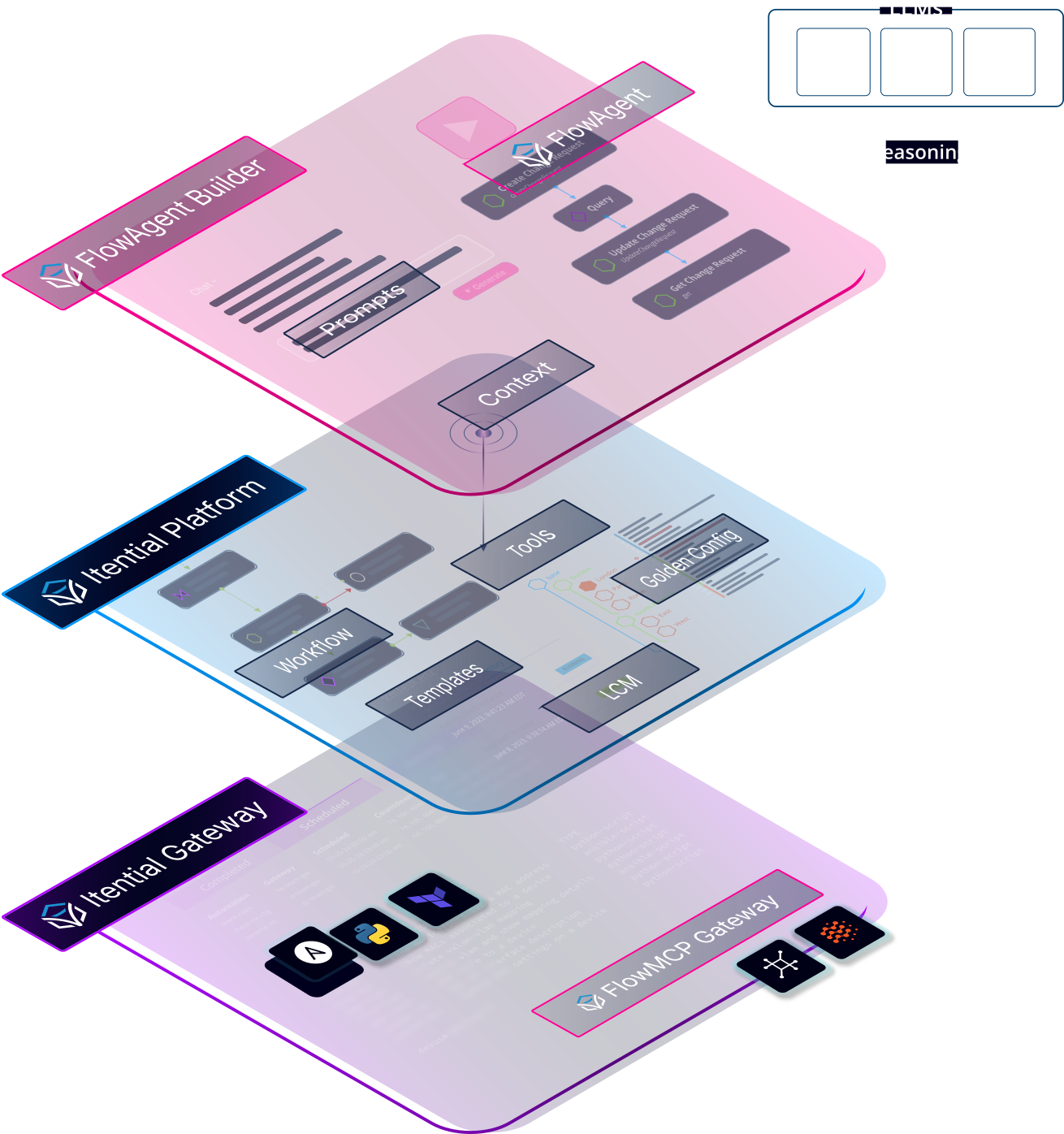
For technical architects evaluating this journey, the key consideration isn’t whether Itential provides the necessary components – the platform clearly addresses each phase. The real question is how quickly each phase can be traversed, and that depends on existing infrastructure automation maturity. Organizations with extensive Itential workflow libraries will progress significantly faster than those building automation foundations simultaneously with AI capabilities.
The future is already here: infrastructure as programmable, governed, and AI-consumable as any cloud service – ready not just for human operators, but for intelligent agents working alongside them.
Frequently Asked Questions
What is the AI infrastructure journey?
The AI infrastructure journey is a five-phase maturity model that describes how enterprises progress from AI experimentation to fully autonomous, governed operations by integrating AI reasoning, deterministic execution, and enterprise-grade governance.
How does Itential support orgs moving through the AI journey phases?
Itential supports this journey with a combination of agentic orchestration, deterministic workflows, and secure execution layers. The platform connects AI reasoning systems to infrastructure through governed APIs and automation gateways, enabling safe, scalable workflows across hybrid environments.
What is Itential FlowAI and why is it important?
FlowAI is Itential’s framework for building and governing intelligent agents that can reason, plan, and orchestrate infrastructure changes. It ensures AI agents operate within enterprise-approved guardrails and deterministic workflows for safe, auditable execution.
What does “human in the loop” mean in the AI journey?
“Human in the loop” refers to phases where humans remain actively involved in reviewing, approving, or directing AI actions – essential for building trust and ensuring safe adoption of AI before progressing to more autonomous operations.
How does Itential ensure governance and compliance for AI-driven actions?
Itential uses built-in governance features like RBAC, SSO, policy enforcement, audit logging, and a deterministic execution layer that validates AI intent against enterprise rules before applying changes.
What is the Model Context Protocol (MCP) and how does Itential use it?
Model Context Protocol (MCP) is an open protocol that enables structured communication between AI agents (or LLMs) and infrastructure platforms. Itential uses MCP to translate AI intent into secure, policy-enforced workflows, providing context, traceability, and compliance.
Can Itential integrate with external AI agents or systems?
Yes. Through the Itential MCP Gateway and MCP Server, the platform can securely connect external AI agents and reasoning systems with automated workflows, enabling coordinated operations across hybrid infrastructure.

Joksan Flores
Principal Solutions Engineer ‐ Itential
Joksan Flores is a Principal Solutions Engineer at Itential. Joksan’s passion for putting both systems and software together led him to spend 10 years as a Networking Architect at Cisco prior to Itential. Throughout his career, Joksan has supported enterprises and service providers with massive customer bases to solve their IT challenges, designing cloud peering connectivity, WAN, and data center networks. While helping organizations solve complex network challenges, Joksan has always found ways to leverage automation – either by devising methods to make work more streamlined or by helping customers achieve their project goals faster. Today at Itential, Joksan focuses on advancing infrastructure automation through AI-driven orchestration, helping organizations navigate the journey from experimental AI assistants to autonomous operations.