

Share this
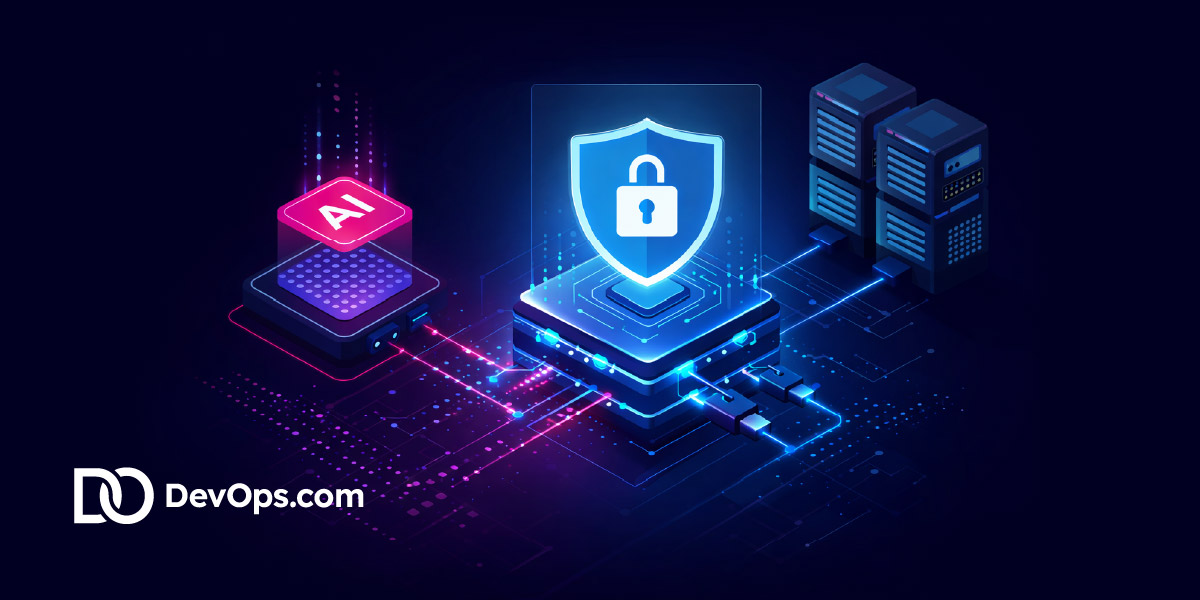
Table of Contents
tldr;
Autonomous agents are starting to transform infrastructure operations, but the teams that win will be the ones that pair AI reasoning with deterministic, governed execution – so automation scales safely instead of getting brittle.
For more than a decade, the evolution of infrastructure automation has followed a clear trajectory. Organizations have invested in workflows, pipelines, controllers, and compliance engines because the market demanded stronger guarantees around reliability and scale. Outages turned into measurable losses. Small misconfigurations cascaded into systemic failures. Even highly skilled teams struggled to keep pace with environments that grew more distributed, dynamic, and interdependent every year.
Today, the industry stands at a new inflection point. Autonomous agents have moved from intriguing prototypes to practical tools. They can interpret intent, evaluate operational conditions, and assemble multi-step plans that align with both policy and context. For the first time, AI can participate meaningfully in the operational lifecycle of infrastructure itself.
The central question has shifted. Enterprises are no longer debating whether AI will play a role in infrastructure operations. They are now focused on how to introduce it safely and predictably.
Three major shifts are already shaping this next chapter.
Shift One: Reasoning Is Moving Up the Stack
Historically, infrastructure automation has relied on rigid logic. Teams embedded rules, conditional branches, templates, and error handling directly into workflows. These constructs worked, but they required constant maintenance and could not easily adapt to new patterns or edge cases.
Modern language models and agent architectures are changing that dynamic. Instead of encoding every rule by hand, teams can rely on agents that understand natural language instructions, synthesize information across systems, and generate plans tailored to real operational conditions. This does not make workflows irrelevant. It changes their role. Workflows become the stable, trusted capabilities that agents call when they need precise, deterministic action. Planning shifts upward. Execution stays grounded in proven automation.
The result is a more flexible model that supports rapid adaptation without sacrificing consistency.
Shift Two: Deterministic Execution Becomes Essential
AI reasoning is inherently probabilistic. Infrastructure execution is not. As organizations explore how autonomous agents fit into their operational practices, they are discovering that the foundation still needs to be deterministic, governed, and transparent. Every action proposed by an agent must pass through strict schemas, policies, and permissions before it touches a live system.
In effect, AI can assist in creating the plan, but only a controlled execution layer should carry it out. This creates a clear boundary between suggestion and action. It also provides an auditable trail, enabling enterprises to scale their automation footprint without inviting unnecessary risk.
Safety and scale are converging on the same requirement. If AI is going to participate in operations, it must do so on top of an execution fabric designed to guarantee predictable outcomes.
A Clear Trajectory Emerges
Taken together, these shifts point toward an ecosystem where infrastructure is supported by specialized autonomous agents, each designed for a specific domain and each operating within a governance framework that ensures safety, compliance, and consistency. Automation will not be driven by static playbooks alone. It will be driven by intelligent systems that understand context and rely on deterministic execution layers to perform the work.
This evolution mirrors what has happened in other complex systems. Manual processes gave way to scripted automation. Scripts gave way to orchestrated workflows. Now workflows are being augmented with reasoning capabilities that allow automation to operate at a higher level of abstraction.
The organizations that prepare for this shift will be the ones that gain the most operational leverage. They will move faster, reduce risk, and free their teams to focus on engineering rather than constant firefighting.
Autonomy is no longer theoretical. It is arriving in practical steps. Those who adapt now will lead the next era of infrastructure operations.
This article was originally published on devops.com.

Peter Sprygada
Chief Architect ‐ Itential
Peter Sprygada serves as the Chief Architect at Itential after serving as the Chief Technology Officer at Pureport where he was responsible for their multi-cloud network as a service interconnect platform. Prior to Pureport, Sprygada was a Distinguished Engineer for Red Hat, where he played the role of Chief Architect for the Ansible Automation Platform. Sprygada also held senior technical and leadership positions at Arista and Cisco, as well as several networking startups.