Itential Platform Pricing Explore flexible plans and options for your team

Itential logo
Comparison Guide

Itential vs a DIY Agentic AI Stack

Every enterprise putting AI agents to work on infrastructure converges on the same DIY stack: an LLM, an agent framework, custom integrations, a workflow engine, and the governance to hold it together. Itential delivers those layers as one governed platform, so your team ships agents that act on production, not proofs of concept.

Updated July 2026 · Built for network and infrastructure operations, not general-purpose AI.

40%
of agentic AI projects will be canceled by 2027.
Gartner, 2025
80%
of DIY agent effort goes to governance and integration, not the agent itself.
MIT Sloan, 2026
11%
of organizations have a governance framework for AI agents in place.
Gartner, 2025
Days
to a first FlowAgent in production on Itential, not months.
Global Tier 1 Telco: 5 FlowAgents in 4 days
The Difference

The Difference Isn’t the Agent. It’s What Runs Underneath.

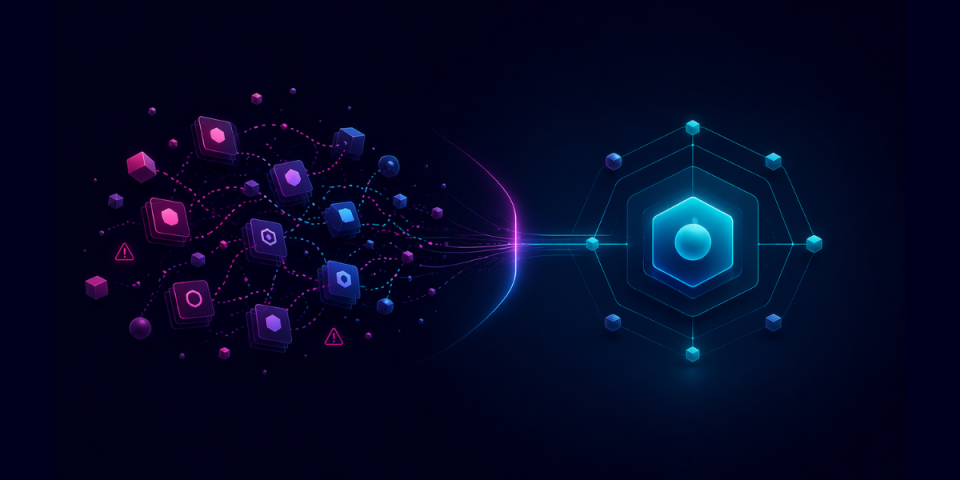
A DIY stack gives you a reasoning layer with governance bolted on top. Itential gives you governed execution across workflows, scripts, configuration compliance, and stateful lifecycle, with reasoning built in. For a customer service bot, the difference is academic. For an agent changing a routing policy on production infrastructure, it’s the whole decision.

AI adds reasoning. Itential adds the guardrails.

Evaluating Build vs Buy

Six Considerations That Decide Build vs Buy

When an agent acts on production infrastructure, six things separate a stack that you maintain from a platform you run.

1. Governance

An agent that can reason and act on production infrastructure can also act wrongly, and the blast radius is real. Governance is what makes autonomous action safe enough to allow at all, so it is the first thing to weigh, not the last.

The criteria that matters:
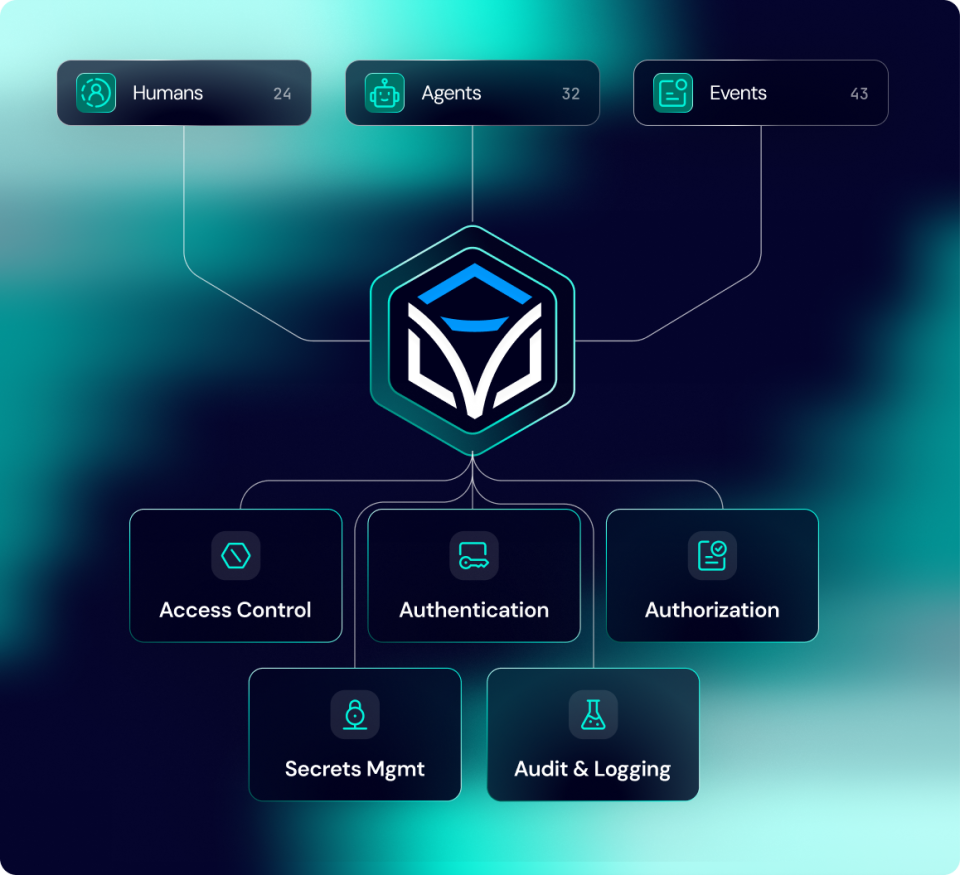
Does every action, whether a human or an agent initiates it, pass through the same enforced RBAC, approval, and audit path by default? If governance is something you bolt on per tool after the reasoning works, you are carrying that risk yourself.

DIY Agentic Stack
Itential

RBAC and audit are built per tool, per integration, and enforced inconsistently. Only 11% of organizations have a governance framework for AI agents in place. The reasoning layer comes first. Governance is bolted on after. The framework decides tool access at runtime, often letting the model discover tools as it runs, so the attack surface can shift mid-session.

One control plane. The same RBAC, GBAC, approval gates, and immutable audit trail apply to every action, whether a human or a FlowAgent triggered it. SOC 2 Type II by default. Zero data retention. Governance is the foundation, not an add-on. Agent tool sets are locked at design time and enforced by the execution engine, so even a successful prompt injection is bounded by a fixed, known surface.

DIY Agentic Stack
Itential

RBAC and audit are built per tool, per integration, and enforced inconsistently. Only 11% of organizations have a governance framework for AI agents in place. The reasoning layer comes first. Governance is bolted on after. The framework decides tool access at runtime, often letting the model discover tools as it runs, so the attack surface can shift mid-session.

One control plane. The same RBAC, GBAC, approval gates, and immutable audit trail apply to every action, whether a human or a FlowAgent triggered it. SOC 2 Type II by default. Zero data retention. Governance is the foundation, not an add-on. Agent tool sets are locked at design time and enforced by the execution engine, so even a successful prompt injection is bounded by a fixed, known surface.

2. Time to Production

The gap between a demo and a governed production agent is where most programs stall. Standing up the reasoning is the easy 20%. The other 80% is the execution, integration, and control scaffolding that has to exist before an agent can safely touch a live network.

The criteria that matters:
Count how much of that scaffolding you would build and maintain versus inherit on day one, and be honest about how long that takes with your current team. Time to production is really a question of how much undifferentiated plumbing you are willing to own.

DIY Agentic Stack
Itential

MIT research is blunt: 80% of a DIY agent program is governance scaffolding and integration work before any agent ships. Gartner expects 40%+ of agentic AI projects to be canceled by 2027.

The 80% is pre-built. Governed execution, rollback, approval gates, audit, and 1,000+ integrations are already there. A global Tier 1 telco put 5 FlowAgents into production in 4 days.

DIY Agentic Stack
Itential

MIT research is blunt: 80% of a DIY agent program is governance scaffolding and integration work before any agent ships. Gartner expects 40%+ of agentic AI projects to be canceled by 2027.

The 80% is pre-built. Governed execution, rollback, approval gates, audit, and 1,000+ integrations are already there. A global Tier 1 telco put 5 FlowAgents into production in 4 days.

3. Integration Model

Agents are only as useful as the systems they can act on, so how you connect to infrastructure decides how far the program scales. The trap is that integration is not a one-time cost. Every system has to be connected, exposed as a governed tool, and then maintained as vendors and APIs change.

The criteria that matters:
Look at your integration count and your rate of change, then decide whether you want to own that curve or consume it. If most of your effort goes into wiring and re-wiring connections, less of it goes into the outcomes agents are supposed to deliver.

DIY Agentic Stack
Itential

The N×M problem. Every new system means writing the integration, defining the agent tool schema, registering it in the framework, adding it to the workflow engine, and instrumenting it for audit. Repeat per vendor, then maintain all of it.

Connect a system once. Every method becomes a workflow task and a scoped, governed FlowAgent tool automatically. 1,000+ production-hardened open-source integrations across multi-vendor infrastructure, maintained by Itential.

DIY Agentic Stack
Itential

The N×M problem. Every new system means writing the integration, defining the agent tool schema, registering it in the framework, adding it to the workflow engine, and instrumenting it for audit. Repeat per vendor, then maintain all of it.

Connect a system once. Every method becomes a workflow task and a scoped, governed FlowAgent tool automatically. 1,000+ production-hardened open-source integrations across multi-vendor infrastructure, maintained by Itential.

4. Token & Context Efficiency

Every agent turn costs tokens, and how an architecture spends them determines whether your bill scales with outcomes or with noise. This is the line item that turns into a FinOps conversation the moment agents go into production.

The criteria that matters:
Does the architecture only spend tokens on reasoning, or does it route tool execution through the model too? And does a sub-agent hand back a lean result, or its entire transcript? Those two answers decide whether your token cost is bounded and predictable, or open-ended and something you have to police yourself.

DIY Agentic Stack
Itential

Most agent frameworks route everything, reasoning and tool execution alike, through the model, so token cost per outcome is structurally higher and less bounded. Tool calls return full raw payloads by default, and sub-agents hand back their entire execution history unless you build custom filtering to trim it. Retries from ambiguous tool schemas silently re-pay the full context cost each time.

FlowAI’s execution is deterministic: tools run at zero token cost, and tokens only fund the reasoning steps. Sub-agents return a lean status/reference/summary by default, not their full transcript. Essentials-tier customers get a defined ~65k-token budget per agent run, not an open-ended one, because the architecture bounds what a session actually costs.

DIY Agentic Stack
Itential

Most agent frameworks route everything, reasoning and tool execution alike, through the model, so token cost per outcome is structurally higher and less bounded. Tool calls return full raw payloads by default, and sub-agents hand back their entire execution history unless you build custom filtering to trim it. Retries from ambiguous tool schemas silently re-pay the full context cost each time.

FlowAI’s execution is deterministic: tools run at zero token cost, and tokens only fund the reasoning steps. Sub-agents return a lean status/reference/summary by default, not their full transcript. Essentials-tier customers get a defined ~65k-token budget per agent run, not an open-ended one, because the architecture bounds what a session actually costs.

5. Centralized Control

Every tool an agent can reach is a door into your infrastructure. Whether that door was installed through one audited, approved path or by an individual engineer on their own laptop determines whether you have a security posture or a hope.

The criteria that matters:
Is there one place where MCP servers, Skills, Python, Ansible, or Terraform get vetted and installed before any agent can use them, with RBAC and AAA enforced on every action? Or does every engineer run their own local stack of agents and tools, invisible to security and impossible to audit as a whole?

DIY Agentic Stack
Itential

Distributed by default. Every engineer can spin up their own agent with their own locally installed tools, MCP servers, and scripts, outside any central review. There’s no single inventory of what tools exist, who installed them, or what an agent can actually reach. Security finds out what’s running by asking around, not by checking a control plane.

One approved install path. MCP servers, Skills, Python, Ansible, and Terraform are vetted and registered centrally, with RBAC and AAA enforced before any agent can call them. There’s a single, current inventory of every tool in play and every agent that can reach it, not a patchwork of individual engineers’ local setups.

DIY Agentic Stack
Itential

Distributed by default. Every engineer can spin up their own agent with their own locally installed tools, MCP servers, and scripts, outside any central review. There’s no single inventory of what tools exist, who installed them, or what an agent can actually reach. Security finds out what’s running by asking around, not by checking a control plane.

One approved install path. MCP servers, Skills, Python, Ansible, and Terraform are vetted and registered centrally, with RBAC and AAA enforced before any agent can call them. There’s a single, current inventory of every tool in play and every agent that can reach it, not a patchwork of individual engineers’ local setups.

6. Reusability & Standardization

A tool connected once should work for everyone, not get rebuilt every time someone new needs it. Whether your agents are shared, standardized assets or one-off scripts that only work on the machine that made them decides whether your program scales or just multiplies effort.

The criteria that matters:
When one engineer connects a system or builds an agent, does the rest of the team inherit it automatically, or does the next person start from scratch? “It works on my machine” is fine for a prototype and a liability for a program.

DIY Agentic Stack
Itential

Bespoke by nature. An engineer’s local MCP server or agent works for them, on their setup, and often nowhere else. Sharing it with another team means handing over a script and hoping the environment matches. Every new use case tends to become its own snowflake build rather than a reuse of something that already exists.

One approved MCP server, once connected, exposes its tools to every agent and every team building on the platform. Agents themselves are reusable and shareable across teams under the same governance, so the work compounds instead of resetting. Standardized, repeatable, and controlled, not a collection of one-off scripts that only run where they were written.

DIY Agentic Stack
Itential

Bespoke by nature. An engineer’s local MCP server or agent works for them, on their setup, and often nowhere else. Sharing it with another team means handing over a script and hoping the environment matches. Every new use case tends to become its own snowflake build rather than a reuse of something that already exists.

One approved MCP server, once connected, exposes its tools to every agent and every team building on the platform. Agents themselves are reusable and shareable across teams under the same governance, so the work compounds instead of resetting. Standardized, repeatable, and controlled, not a collection of one-off scripts that only run where they were written.

Side by Side

DIY Agentic Stack vs Itential: How the Two Approaches Compare

No tool wins on every axis. Here’s an honest read on where a DIY agentic stack holds up, and where a governed platform pulls ahead, when agents act on production infrastructure.

 
DIY Agentic Stack
Itential
Time to Production
Weeks to Months
Days to First Agent
Multi-Vendor Integration
Custom per System
1,000+ Open Source
Governed Script Execution
Ad Hoc, No Audit
Itential Gateway
Config & Compliance
Fragmented Tools
Built-In, Continuous
Service Lifecycle
Usually a Gap
Day 0 to Day N
Governance, RBAC & Audit
Built per Tool
One Control Plane
Agent Tool Scope
Discovered at Runtime
Locked at Design Time
Credential Handling
Held by the Agent
Never Touch the Agent
Human-in-the-Loop
Bespoke per Workflow
Native, Consistent
Pre-Built Infra Content
Start from Scratch
Maintained Library
Agent Framework Choice
Any Framework
Model-Agnostic
Portability & No Lock-In
Fully Swappable
Transferrable Skills & Prompts
General-Purpose AI
Broad Use Cases
Infrastructure Only
Token & Context Cost
Unbounded, Model-Routed
Bounded, Architecture-Controlled
Centralized Control
Distributed, Unaudited
Single Approved Install Path
Reusability & Standardization
Bespoke, Machine-Bound
Shared, Standardized Assets
 
DIY Agentic Stack
Itential
Time to Production
Weeks to Months
Days to First Agent
Multi-Vendor Integration
Custom per System
1,000+ Open Source
Governed Script Execution
Ad Hoc, No Audit
Itential Gateway
Config & Compliance
Fragmented Tools
Built-In, Continuous
Service Lifecycle
Usually a Gap
Day 0 to Day N
Governance, RBAC & Audit
Built per Tool
One Control Plane
Agent Tool Scope
Discovered at Runtime
Locked at Design Time
Credential Handling
Held by the Agent
Never Touch the Agent
Human-in-the-Loop
Bespoke per Workflow
Native, Consistent
Pre-Built Infra Content
Start from Scratch
Maintained Library
Agent Framework Choice
Any Framework
Model-Agnostic
Portability & No Lock-In
Fully Swappable
Transferrable Skills & Prompts
General-Purpose AI
Broad Use Cases
Infrastructure Only
Token & Context Cost
Unbounded, Model-Routed
Bounded, Architecture-Controlled
Centralized Control
Distributed, Unaudited
Single Approved Install Path
Reusability & Standardization
Bespoke, Machine-Bound
Shared, Standardized Assets
 
DIY Agentic Stack
Itential
Time to Production
Weeks to Months
Days to First Agent
Multi-Vendor Integration
Custom per System
1,000+ Open Source
Governed Script Execution
Ad Hoc, No Audit
Itential Gateway
Config & Compliance
Fragmented Tools
Built-In, Continuous
Service Lifecycle
Usually a Gap
Day 0 to Day N
Governance, RBAC & Audit
Built per Tool
One Control Plane
Agent Tool Scope
Discovered at Runtime
Locked at Design Time
Credential Handling
Held by the Agent
Never Touch the Agent
Human-in-the-Loop
Bespoke per Workflow
Native, Consistent
Pre-Built Infra Content
Start from Scratch
Maintained Library
Agent Framework Choice
Any Framework
Model-Agnostic
Portability & No Lock-In
Fully Swappable
Transferrable Skills & Prompts
General-Purpose AI
Broad Use Cases
Infrastructure Only
Token & Context Cost
Unbounded, Model-Routed
Bounded, Architecture-Controlled
Centralized Control
Distributed, Unaudited
Single Approved Install Path
Reusability & Standardization
Bespoke, Machine-Bound
Shared, Standardized Assets
An Honest Take

DIY Isn’t Wrong. It’s a Question of What the Agent Touches.

Building your own stack is a legitimate, often correct choice. Here’s where each approach earns its place.

Build the DIY Agentic Stack when
Choose Itential when

Your agents are general-purpose: customer service, documents, sales, HR, code generation.

Your use case is network and infrastructure automation across multiple vendors.

You have a dedicated AI engineering team that will own the full stack long-term.

You need config compliance, drift remediation, and service lifecycle tracking.

Maximum framework and model portability is a hard procurement constraint.

Agents act on production, so governance and audit can’t be optional.

You’re in early experimentation, before committing to a platform.

Your team is network and infrastructure engineers, not AI engineers.

Your agents don’t touch production infrastructure, so the risk profile is lower.

You need to reach production-grade agentic operations in months, not years.

Build the DIY Agentic Stack when
Choose Itential when

Your agents are general-purpose: customer service, documents, sales, HR, code generation.

Your use case is network and infrastructure automation across multiple vendors.

You have a dedicated AI engineering team that will own the full stack long-term.

You need config compliance, drift remediation, and service lifecycle tracking.

Maximum framework and model portability is a hard procurement constraint.

Agents act on production, so governance and audit can’t be optional.

You’re in early experimentation, before committing to a platform.

Your team is network and infrastructure engineers, not AI engineers.

Your agents don’t touch production infrastructure, so the risk profile is lower.

You need to reach production-grade agentic operations in months, not years.

For general-purpose AI, build. For governed action on production infrastructure, the 80% you’d build is the reason to buy.

It’s the Platform, Not Just the Agent

Ten Layers to Build, or One Platform to Run

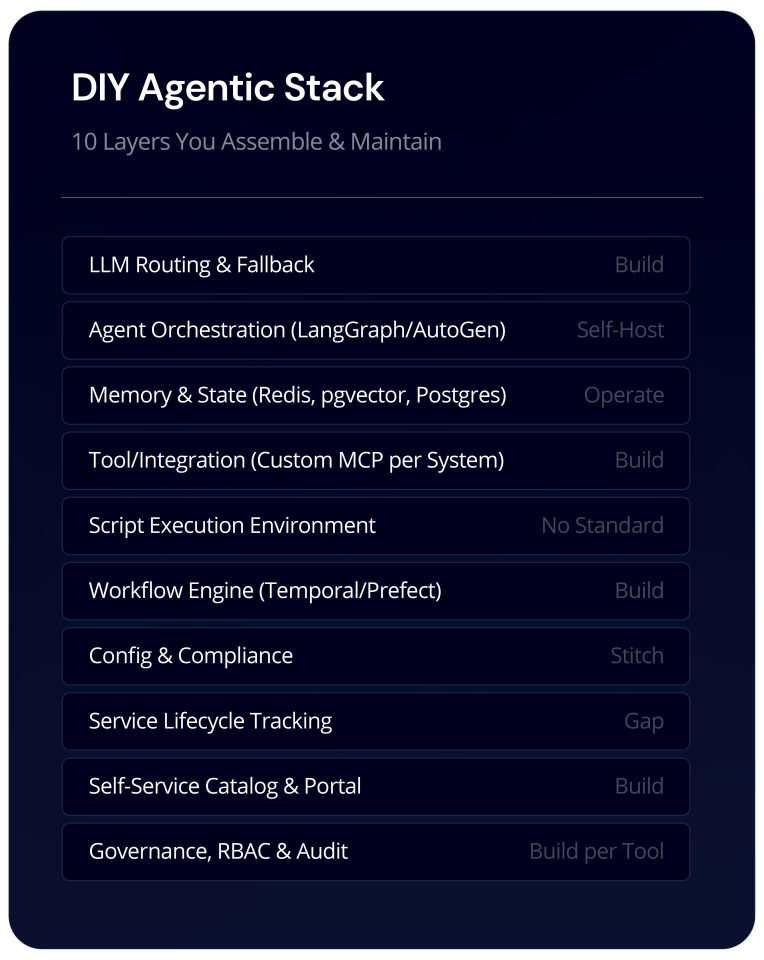
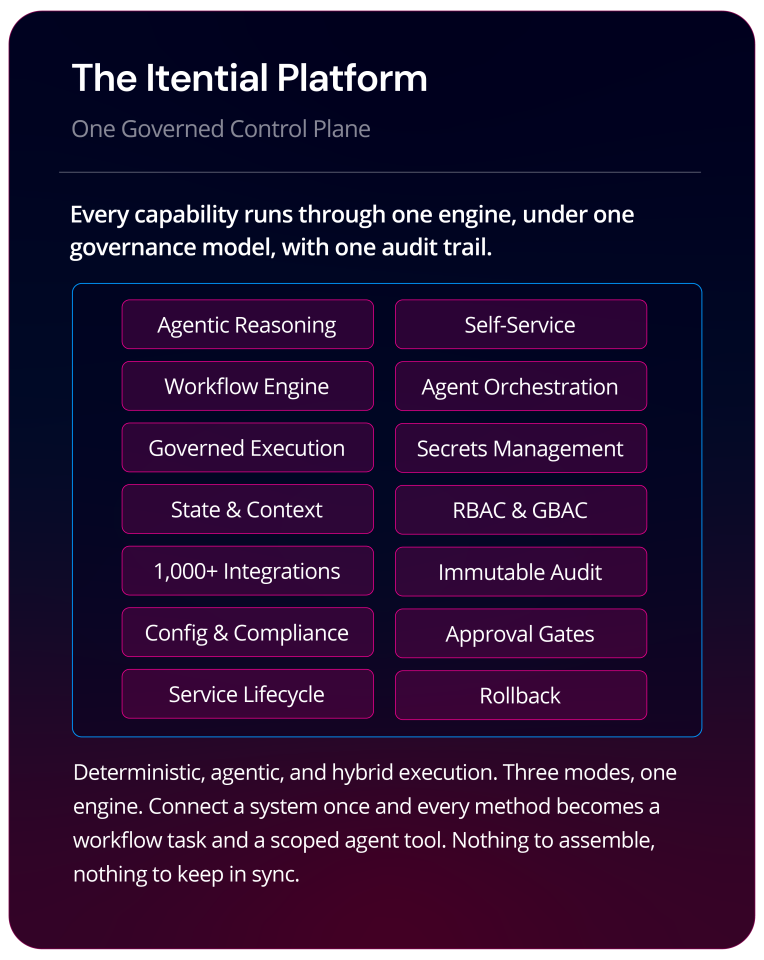
A DIY agent stack is really ten layers you build, integrate, and maintain yourself. Itential ships them as one governed platform. An agent without them is a brain with no hands. The platform is the hands.

Build it yourself
Itential gives you

LLM routing and fallback: OpenAI, Anthropic, or self-hosted Llama, wired and maintained by you

Model-agnostic: choose the LLM per FlowAgent and swap it without rewriting logic

Agent orchestration: LangGraph, AutoGen, or CrewAI, self-hosted and version-chased

FlowAgent Builder: persona-based, natural-language agent design with scoped, governed tools

Memory and state: Redis, pgvector, and Postgres, each provisioned and operated separately

State managed in-platform, with Lifecycle Manager tracking real service state

Tool and integration: a custom MCP server or wrapper built per system, versioned by hand

Itential MCP, FlowMCP plus 1,000+ pre-built integrations, every method exposed as a governed tool

Script execution: Python, Ansible, and Terraform on ad-hoc Jenkins or cron, no RBAC or audit

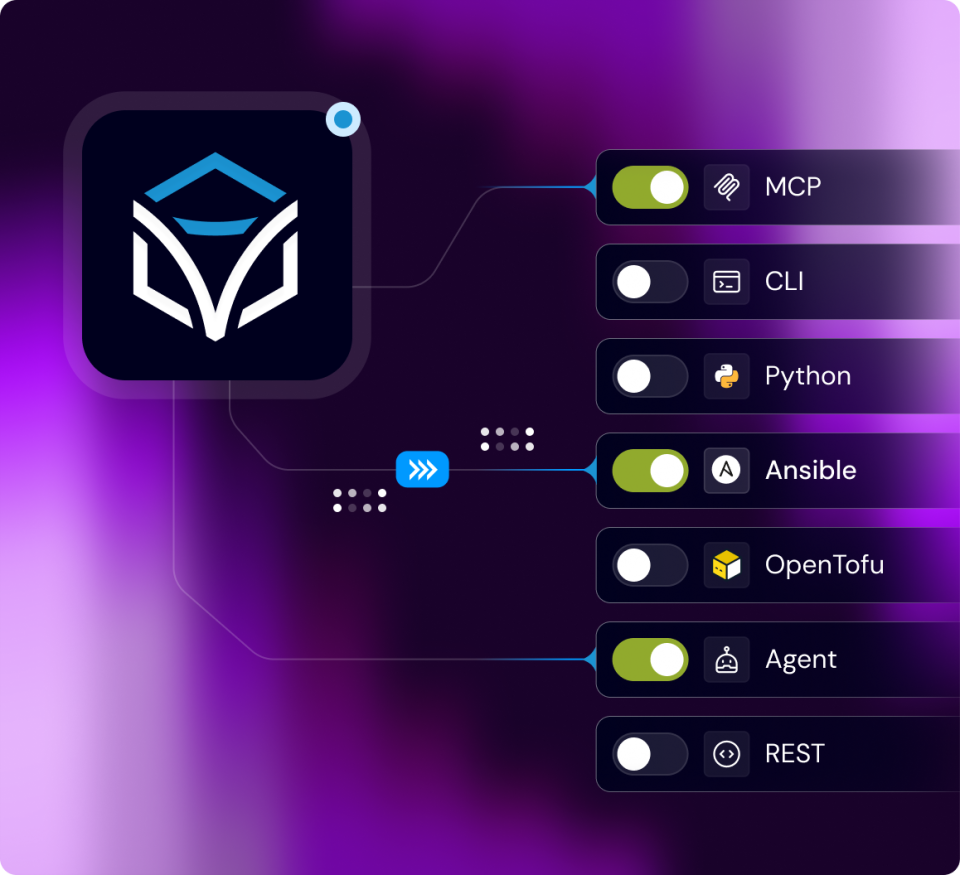
Itential Gateway: governed execution for Python, Ansible, and OpenTofu with full audit on every run

Workflow engine: Temporal or Prefect, with rollback, approvals, and pre/post checks all custom

Workflow Studio: low-code orchestration with rollback, approval gates, and pre/post validation built in

Config and compliance: Ansible, Nornir, and RANCID stitched together, evidence built by hand

Configuration Manager: golden config, continuous drift detection, and automated remediation

Service lifecycle: ServiceNow CMDB or spreadsheets, with no link to the automation acting on it

Lifecycle Manager: stateful tracking from provision to decommission, so agents check real state first

Self-service catalog: a custom Backstage or ServiceNow portal to expose automations safely

Operations Manager and ServiceNow App: a governed self-service catalog

Governance, RBAC, and audit: rebuilt per tool, with no unified control plane or audit trail

One control plane: platform-wide RBAC, SSO, and a unified audit trail across every layer

Build it yourself
Itential gives you

LLM routing and fallback: OpenAI, Anthropic, or self-hosted Llama, wired and maintained by you

Model-agnostic: choose the LLM per FlowAgent and swap it without rewriting logic

Agent orchestration: LangGraph, AutoGen, or CrewAI, self-hosted and version-chased

FlowAgent Builder: persona-based, natural-language agent design with scoped, governed tools

Memory and state: Redis, pgvector, and Postgres, each provisioned and operated separately

State managed in-platform, with Lifecycle Manager tracking real service state

Tool and integration: a custom MCP server or wrapper built per system, versioned by hand

Itential MCP, FlowMCP plus 1,000+ pre-built integrations, every method exposed as a governed tool

Script execution: Python, Ansible, and Terraform on ad-hoc Jenkins or cron, no RBAC or audit

Itential Gateway: governed execution for Python, Ansible, and OpenTofu with full audit on every run

Workflow engine: Temporal or Prefect, with rollback, approvals, and pre/post checks all custom

Workflow Studio: low-code orchestration with rollback, approval gates, and pre/post validation built in

Config and compliance: Ansible, Nornir, and RANCID stitched together, evidence built by hand

Configuration Manager: golden config, continuous drift detection, and automated remediation

Service lifecycle: ServiceNow CMDB or spreadsheets, with no link to the automation acting on it

Lifecycle Manager: stateful tracking from provision to decommission, so agents check real state first

Self-service catalog: a custom Backstage or ServiceNow portal to expose automations safely

Operations Manager and ServiceNow App: a governed self-service catalog

Governance, RBAC, and audit: rebuilt per tool, with no unified control plane or audit trail

One control plane: platform-wide RBAC, SSO, and a unified audit trail across every layer

The Integration Flywheel

Five Builds Per System, or One Connection for All

In a DIY stack, every new system is wired five times over: an integration, an agent tool schema, a workflow step, audit instrumentation, and ongoing upkeep as the API changes. In Itential, you connect it once and it propagates to every layer automatically.

DIY: the N×M problem
Itential: the 1×All multiplier

Write the integration or MCP server for each vendor API

Upload an OpenAPI spec or decorate a script once, and the adapter is generated

Define every method as an LLM tool with its own JSON schema

Every API method becomes a drag-and-drop workflow task automatically

Register it in the agent framework, then add it again as a workflow step

The same method is instantly selectable as a scoped, governed FlowAgent tool

Instrument each call for audit, and maintain all of it as the API changes

Every call inherits platform RBAC, approvals, and audit, with no extra wiring

Every new vendor is N methods times four or five engineering tasks each

One connection, and all layers update at once, across 1,000+ integrations

DIY: the N×M problem
Itential: the 1×All multiplier

Write the integration or MCP server for each vendor API

Upload an OpenAPI spec or decorate a script once, and the adapter is generated

Define every method as an LLM tool with its own JSON schema

Every API method becomes a drag-and-drop workflow task automatically

Register it in the agent framework, then add it again as a workflow step

The same method is instantly selectable as a scoped, governed FlowAgent tool

Instrument each call for audit, and maintain all of it as the API changes

Every call inherits platform RBAC, approvals, and audit, with no extra wiring

Every new vendor is N methods times four or five engineering tasks each

One connection, and all layers update at once, across 1,000+ integrations

The Platform Defining the Agentic Era of Infrastructure

Why Itential Is the Platform AI Needs to Act on Infrastructure

AI brought the reasoning. Itential brings the governed harness it acts through, the execution, integration, and control that make an agent safe to run on a live network. That is the platform, and it is why serious infrastructure teams run agentic operations on Itential.

Reasoning you can trust to act. That is what defines the agentic era of infrastructure, and it is what Itential was built for.

Governance is the Foundation, Not a Feature

Every action, whether a human or a FlowAgent starts it, runs through one enforced path of RBAC, GBAC, approval gates, and immutable audit. That is what makes autonomous action on production infrastructure allowable at all.

Reasoning & Execution in One Platform

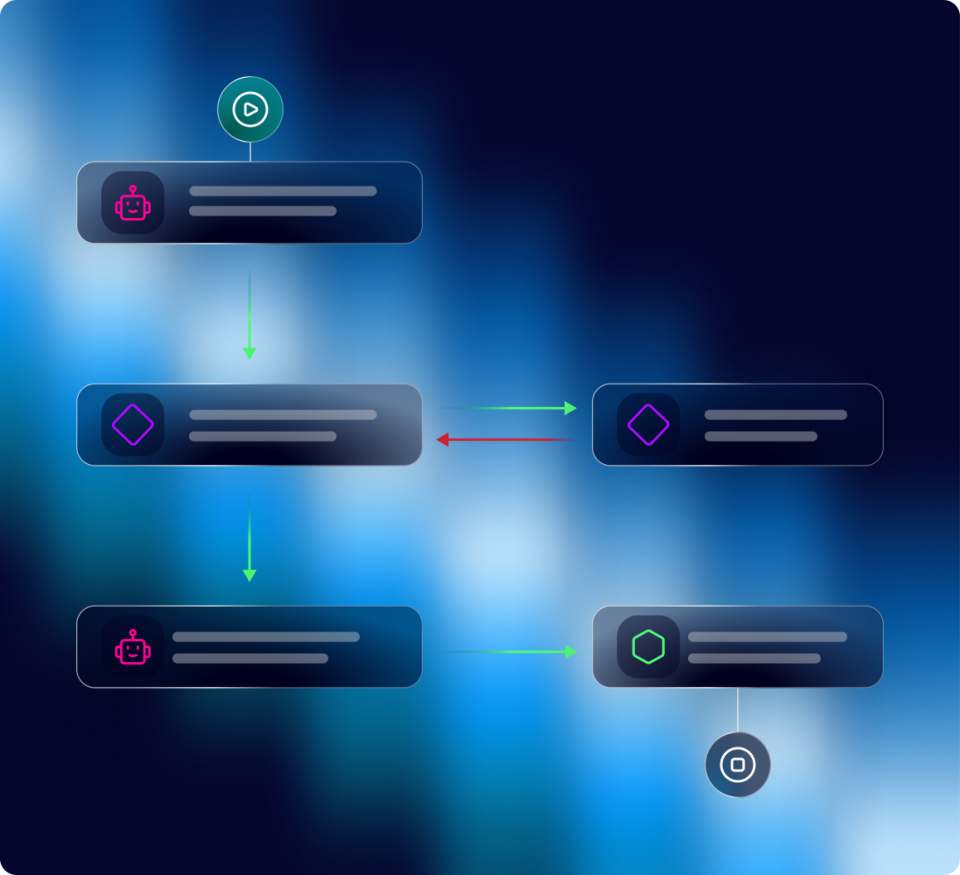
Agents reason through the goal. The platform executes it through governed paths, scripts via Itential Gateway, direct API calls, and platform workflows. Deterministic and agentic in the same place, not two stacks stitched together.

Connect Once, Govern Everywhere

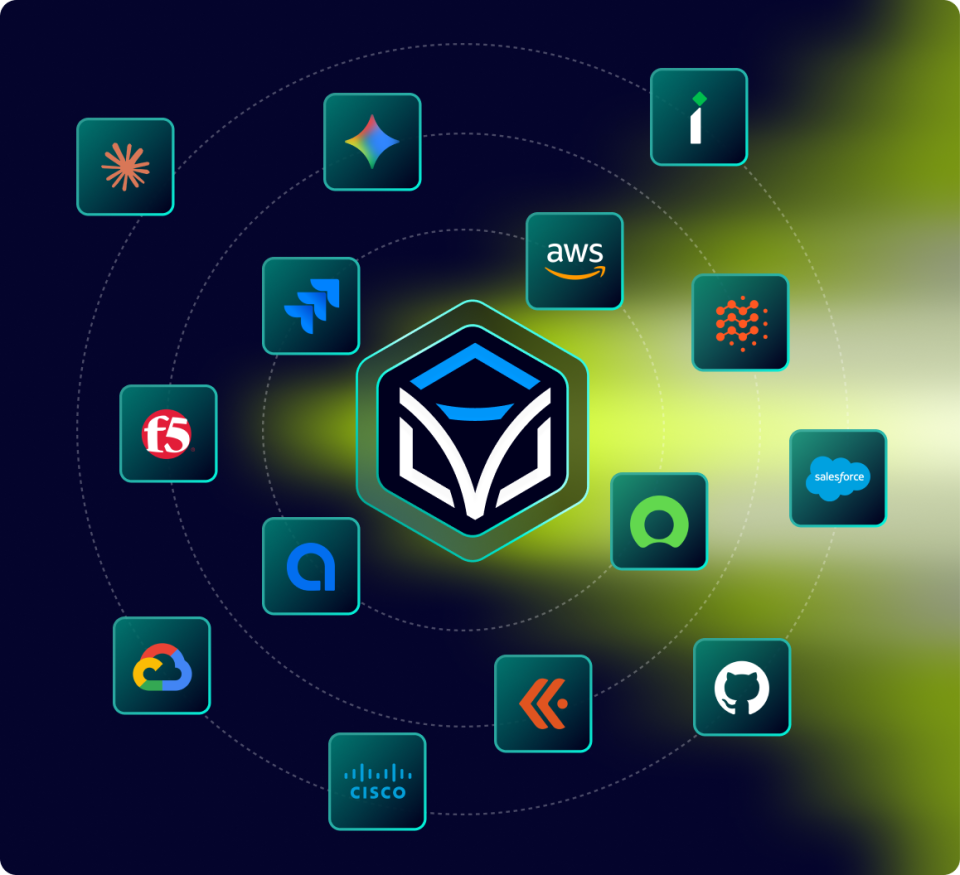
Every system you connect becomes a scoped, governed tool an agent can call, backed by 1,000+ production-hardened integrations across multi-vendor infrastructure. You consume the integration curve instead of owning it.

You Keep What You Already Built

Your existing Ansible, Python, and scripts become governed, reusable tools with no rewrite. The platform raises the floor under what you have rather than replacing it.

Proven in Production

Trusted to Act on Production Infrastructure at Scale

The teams running the world’s most demanding networks don’t adopt agentic operations on faith. They adopt it because the governance, execution, and audit are already there. See what it looks like when AI acts on production infrastructure inside the same controls your team already trusts.
Get Started

See Itential Act on Your Infrastructure

Bring your own environment and your own agents. We’ll show you governed execution, integration, and control on live infrastructure.

FAQs

Build vs Buy, Answered

+

It depends on what the agent acts on. For general-purpose AI across business functions, a DIY stack with open-source frameworks gives you flexibility and portability. For agents taking action on production network and infrastructure, the governance, execution, and integration scaffolding you’d build is roughly 80% of the effort, and it’s exactly what Itential provides out-of-the-box.

+

They’re capable agent orchestration frameworks, and Itential is model and framework friendly. The gap is everything underneath the reasoning layer: governed script execution, a workflow engine with rollback and approval gates, configuration compliance, service lifecycle tracking, a self-service catalog, and pre-built infrastructure integrations. None of that ships with an agent framework. You build and maintain it yourself.

+

Lock the tool set before the agent runs, keep credentials out of the agent entirely, and trace every run. On Itential, a FlowAgent’s tools are fixed at design time and enforced at runtime by the execution engine, credentials stay on the Integration Instance, Adapter, or Itential Gateway service and are injected at execution only, and FlowAgent Sessions record every reasoning step and tool call. In a DIY stack, each of those protections is something you build and maintain per component.

+

Not necessarily. A common 2026 pattern is two tracks: DIY stacks for general-purpose AI in functions like customer service and sales, and Itential as the governed execution platform for infrastructure operations. The Itential MCP Server connects the two, so any AI agent in the enterprise can invoke governed infrastructure actions without bypassing the control plane.

+

There’s a real trade-off, and we’re direct about it. DIY wins on component portability. Itential is model-agnostic and built on open standards like MCP, with 1,000+ open-source integrations, but the execution and governance model is the platform’s. The question is whether you want to own and maintain that model yourself, or run on one that’s already production-hardened.

+

A first FlowAgent typically reaches production within days, because governance, execution, and connectivity already exist. A global Tier 1 telco put 5 FlowAgents into production in 4 days using Spec-Driven Development.

+

Itential is purpose-built for network and infrastructure operations: multi-vendor networks, cloud, security policy, SD-WAN, and hybrid orchestration. It is not designed for general-purpose business AI. That focus is the source of its depth, and the reason DIY remains the better choice for non-infrastructure agents.

+

In a DIY stack, yes, and more than once. Each system means writing the integration, defining the agent tool schema, registering it in the framework, adding it to the workflow engine, and instrumenting it for audit, then maintaining all of it as the API changes. In Itential, you connect a system once and every method becomes both a workflow task and a scoped, governed FlowAgent tool automatically, across 1,000+ pre-built integrations. You consume the integration curve instead of owning it.

+

Tool execution itself doesn’t cost tokens on Itential — only the LLM’s reasoning does. Sub-agents return a lean result (status, identifier, short summary) rather than their full execution history, and builders can scope tool schemas and payloads to avoid over-specified prompts that inflate every turn. That’s why Essentials-tier customers work within a defined token budget per agent run rather than an open-ended one.

+

Tools, MCP servers, and scripts get vetted and installed once, centrally, through the same RBAC and governance controls your team already runs on, with AAA enforced on every call. Engineers build agents against that approved, governed set rather than installing their own locally, so there’s one inventory of what’s running and one place to control it, not a separate shadow stack per person.

+

Yes. Once a tool or MCP server is connected centrally, it’s exposed to every agent and team on the platform, not just the one that built it. Agents themselves are reusable assets under the same governance — the same problem covered in Why Agent Sprawl Is the Next Script Sprawl. In a DIY stack, that reuse usually means handing over a script and hoping it works in someone else’s environment.

Keep Learning

The Latest in Agentic Operations