...
Itential Platform Pricing Explore flexible plans and options for your team

Itential logo
Unified Change Management

Standardize Infrastructure Changes Across Every Team, Tool, & Domain

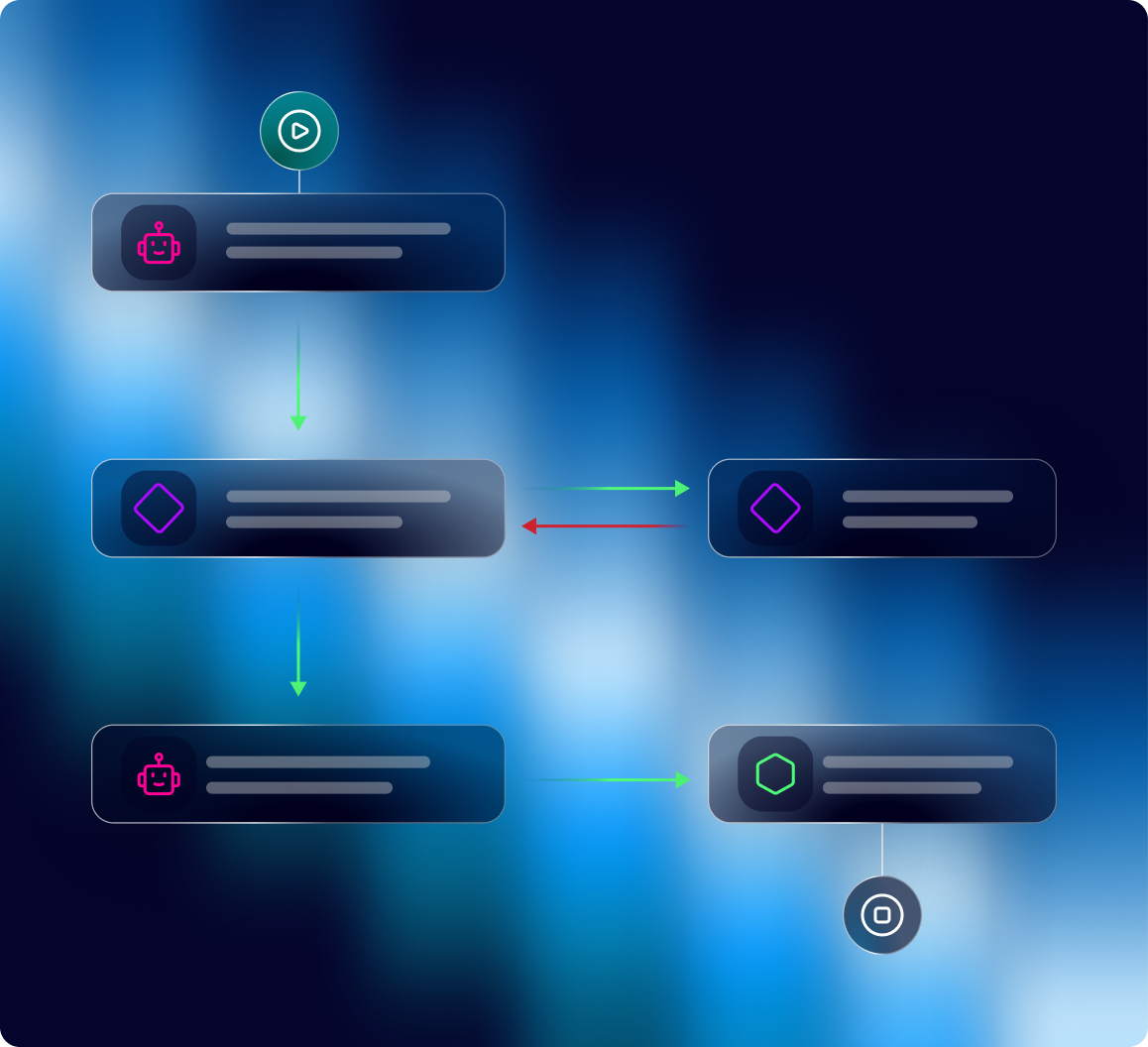
A network or infrastructure change is never just the change. It’s the ticket, the approval, the notification, the update, and the proof it worked, split across whichever specialist owns each piece. Itential runs all of it as one unified workflow, across every team, tool, and domain, no matter who runs it or what triggered it.

Pre/Post Validation Is Manual & Inconsistent

Engineers run pre-checks manually, copy-paste outputs into tickets, and hope post-checks happen before the change window closes. When they don’t, nobody finds out until production breaks.

Rollback Is an Afterthought

Most change processes assume success. When a change fails mid-execution across multiple devices, recovery is manual, slow, and incomplete, leaving infrastructure in an unknown state.

One Request Means Tickets Across Multiple Teams

A single change gets split up: a script here, a network change there, cloud infrastructure somewhere else, each piece waiting on whichever specialist is free to pick it up.

Engineers Swivel-Chair Between Systems to Finish One Change

The same engineer logs into one console to make their piece of the change, then logs into another to keep going. Every switch adds time, and across hundreds of changes a year, that time is real operational cost.

Current Challenges

Manual Change Processes Create Risk, Rework, & Delay at Scale

Most infrastructure teams are still executing changes the same way they did a decade ago: manually, across multiple systems, with engineers switching between tools and teams to get one change done. As environments grow more complex, that manual relay is what creates the risk, the rework, and the delay at scale.

Itential Named in the 2026 Gartner® Market Guide

The Gartner® Market Guide for Infrastructure Automation & Orchestration Tools covers what infrastructure teams need as automation and AI reshape operations. Itential was named a representative vendor for the third year in a row.

The Shift

Change by Hand vs. Change Orchestrated

Most enterprises run change management as a ticketing process: approvals in ServiceNow, execution split across whichever team or tool owns that piece, evidence assembled after the fact. Itential runs it as one workflow instead, across every team, tool, and domain.

Icon symbolizing human in the loop
Change by Hand
Change Orchestrated
A request gets split into separate tickets across separate teams
One workflow carries the request across every team it touches
Each vendor’s tool handles its own domain and nothing else
One workflow calls every vendor’s tool from a single run
Engineers switch between consoles to finish one change
One workflow does what today takes five logins
Pre and post checks run manually, inconsistently, sometimes skipped
Pre and post validation runs automatically on every change, every time
Rollback is a runbook, manual recovery, often incomplete
State captured before execution, automatic rollback on any failure
Building automation across systems means a requirements doc and a developer
The person who knows the process builds the workflow directly, in plain language
Icon symbolizing human in the loop
Change by Hand
Change Orchestrated
A request gets split into separate tickets across separate teams
One workflow carries the request across every team it touches
Each vendor’s tool handles its own domain and nothing else
One workflow calls every vendor’s tool from a single run
Engineers switch between consoles to finish one change
One workflow does what today takes five logins
Pre and post checks run manually, inconsistently, sometimes skipped
Pre and post validation runs automatically on every change, every time
Rollback is a runbook, manual recovery, often incomplete
State captured before execution, automatic rollback on any failure
Building automation across systems means a requirements doc and a developer
The person who knows the process builds the workflow directly, in plain language
Orchestration, Not Just Automation

Automate the Task. Orchestrate the Change.

Ansible is good at Ansible. ServiceNow is good at the ticket. Neither one ties the two together, or the ten other systems in between. Itential is the orchestration layer that runs the whole change as one workflow, across every tool already in the stack, without adding another one to it.

Beyond the Change Itself

Orchestrate Everything Around the Change, Not Just the Change

Pre-checks, post-checks, the ServiceNow ticket, suppressing monitoring alerts for the change window, the record when it’s done, these are the pieces that make a change real, not just technically complete. Itential runs every one of them inside the same workflow as the change itself.

Icon symbolizing a ticket
Ticket to Execution, One Workflow

The workflow opens the ServiceNow ticket, suppresses monitoring alerts for the change window, and runs the change end to end. No handoff between the person who requested it and the person who executes it.

Icon symbolizing validation
Approvals Routed, Not Chased

The right approver is notified the moment their decision is needed, and the workflow waits on it. No follow-up email, no chasing someone down before the window closes.

icon of a cog and lines of text or code
The Record Writes Itself

Success or failure updates the ticket and closes it automatically, artifacts attached. Nobody reconstructs what happened after the fact.

One Workflow, Every Tool

Connect the Tools You Already Have

Ansible runs Ansible. The firewall console runs the firewall. Neither one talks to the other, or to the twenty more tools in between. Itential is the layer that ties them together into a single workflow, without replacing any of them.

Connects Without Rewriting Anything

1,000+ integrations, plus anything with an OpenAPI spec, connect in as they are. Existing tools stay exactly where they are, Itential is the layer that calls them in sequence.

Icon with three different nodes connected by lines, symbolizing multi-domain connectivity.
One Workflow, Every Vendor

A single run reaches every vendor’s tool at once, AWS, Azure, Zscaler, whatever’s in the stack, instead of a different console and a different person for each.

Icon symbolizing a tool
No Rip-and-Replace

Existing tools stay exactly where they are. Itential is the layer that calls them in sequence, not a replacement for what’s already running.

Built by the People Who Know the Process

Spec In. Workflow Out.

Orchestrating a change across systems used to mean writing a requirement and handing it to a developer. FlowAI lets the person who actually knows which steps need to happen build it directly instead, in plain language, with the right tools selected for the job.

Describes the Process, Not the Code

A network architect or engineer describes what needs to happen and which systems are involved. FlowAI turns that into a working workflow.

icon of a stopwatch or dial
Minutes, Not a Requirements Doc

No handoff to a developer, no waiting on a sprint. What used to take months of back-and-forth takes minutes to build.

icon showing connections between nodes
Converts to a Workflow Once It’s Proven

An agent that’s proven itself converts into a deterministic workflow, same result, without the ongoing reasoning cost.

Users now get faster service delivery because Itential automates the entire process. What used to take days now takes minutes, and that’s a massive improvement for us.
Eric Anderson
Senior Infrastructure Architect, Armstrong World Industries
Success in the Numbers

Real Outcomes. Proven in Production.

Every number below comes from a real customer running Itential in production, not a lab estimate. This is what happens when change stops depending on a relay of tickets, tools, and people, and runs as one coordinated workflow instead.

85%
Fewer Change-Related Incidents
One global insurance provider cut change-related incidents by 85% after standardizing execution across its infrastructure.
90%
Fewer Manual Change Steps
Southern California Edison eliminated 90% of the manual steps in every change across its field network.
25K
Devices Automated for Software Upgrades
Fiserv automated software upgrades across 25,000 devices without writing a single new script.
6
Hours to Minutes: Software Upgrade Cycle Time
Southern California Edison compressed a software upgrade cycle from 6 hours to under 20 minutes.
5
FlowAgents Built for Service Provisioning in 4 Days
A global Tier 1 telecom stood up 5 FlowAgents in 4 days to automate new service provisioning, instead of months of manual build.
Real Customers. Real Workflows. Real Numbers.
Not projections. The difference between a change that depends on whoever’s free and one that runs the same way every time.
Read More Customer Stories
Get Started

Stop Relaying Changes. Start Orchestrating Them.

See how Itential runs the next change as one workflow instead of a relay of tickets, tools, and specialists. The ticket opens itself, the right tools get called automatically, and the record closes the loop when it’s done.

Keep Learning

The Latest in Automation & Orchestration

Frequently Asked Questions

–+

Pick one recurring change that splits across multiple teams or tools right now, a software upgrade, a firewall change, a provisioning request. Orchestrate it as one workflow, prove it, then add the next one. Most customers see meaningful results within 30 to 60 days.

–+

Most teams see it on the first workflow within 30 to 60 days: fewer handoffs, faster completion, less manual documentation. Covering more change types, and letting FlowAgents take on more of the work, happens over the following months.

–+

No. The CAB still defines what changes need approval, what risk tiers apply, and what windows are acceptable. Itential enforces those decisions at execution time, automatically, so the CAB reviews patterns instead of individual tickets.

–+

ServiceNow manages the ticket, the approval, and the workflow record. Itential is what actually runs the change once it’s approved, across every team and tool involved, and closes the loop back to the ticket automatically when it’s done.

–+

Itential captures infrastructure state before the first step of any change runs. If any step fails, automated rollback triggers immediately, returning every affected system to its pre-change state across every device, domain, and system touched. No manual recovery. No partial states. The complete execution history, what ran, what failed, what rolled back, and why, is always available without log analysis.

–+

The agent goes through the same path a person would: the same approval rules, the same checks before and after, the same rollback if something goes wrong, and the same record afterward. It has no way to touch infrastructure outside that path.

–+

They connect in as they are. Nothing gets rewritten. Once connected, each one becomes callable from the same workflow instead of something a specialist has to run by hand.

–+

Yes. The same workflow applies whether the change touches a CLI-managed network device, an API-managed cloud resource, a firewall rule, or an SD-WAN controller. One execution model, regardless of what’s underneath.

–+

No. Controllers like Catalyst Center and Meraki are excellent at what they do: pushing updates, provisioning, running their own domain. What they don’t do is open a ticket, update the CMDB, or tie that change to everything else happening across the environment. Itential orchestrates on top of the controllers you already run, not instead of them.

–+

A service model describes what a service should look like. Itential’s lifecycle tracking is different: it’s the state of what’s actually been done to the infrastructure, the record of every change, not a model of an intended service. It’s built to track real execution history, not simulate a service definition.

–+

Scripts work, but credentials usually end up hardcoded inside them, and there’s no consistent way to control who can run what. Itential connects to your existing scripts and adds RBAC and secrets management on top, so the scripts stay, the risk of a hardcoded credential doesn’t.