I built a multi-agent system to configure a network. Gave it reasoning models, configuration tools, a testing framework, and a specialized model to decide whether the work should proceed.
Then I hit Run, started recording, and watched Jev reject the result.
Three validation checks had failed. Jev called for rollback. The recovery needed operator attention. That is in the video too.
I could have shown only the successful run. But if we’re going to talk about agents making infrastructure changes, I want to see what happens when the answer is no.
A Decision Model Has a Different Job
When I worked with Antares, the attraction was a model built for a specific task: finding weaknesses in code. I could put that capability to work alongside other models that fixed the code and reported the result.
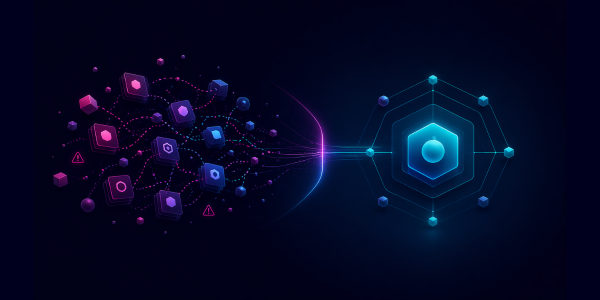
Jev got my attention for a similar reason. TypeSafe calls it a System One model. It evaluates state and returns structured decisions with probabilities, rather than generating a conversational answer. That is the part I wanted to test on a network change.
I already had models that could investigate a topology, reason through a configuration, and produce a plan. I wanted a separate evaluation of whether the evidence supported moving forward, whether the proposed change should be approved, and whether the result should be accepted.
Those are different questions. I gave Jev a place at each of those checkpoints.
Four Devices With Nothing but Management Access
The lab started with two routers and two switches in Cisco Modeling Labs. Management connectivity worked. There was no BGP overlay, no OSPF underlay, no VLAN setup, and none of the subinterfaces needed for the topology I wanted.
The goal was to build that network, verify it, and report what happened.
Claude Opus coordinated the work. An investigator and planner running Sonnet collected device state and proposed the changes. An executor and validator, also using Sonnet, applied configurations and tested the result. A locally hosted Gemma model handled the final communications.
Jev evaluated the evidence and the work as it moved through that process. It did not write the router configurations. It did not push them. It assessed the inputs I gave it and returned decisions the coordinator could act on.
I also limited the tools before any of this ran. The investigator had show commands. The executor had pyATS configuration capabilities, including configuration diffs.
If the investigator decided it wanted to configure a router, it did not have the tool to do it. That boundary was part of the build.
Bring Your Own Model Also Means Choosing How It Connects
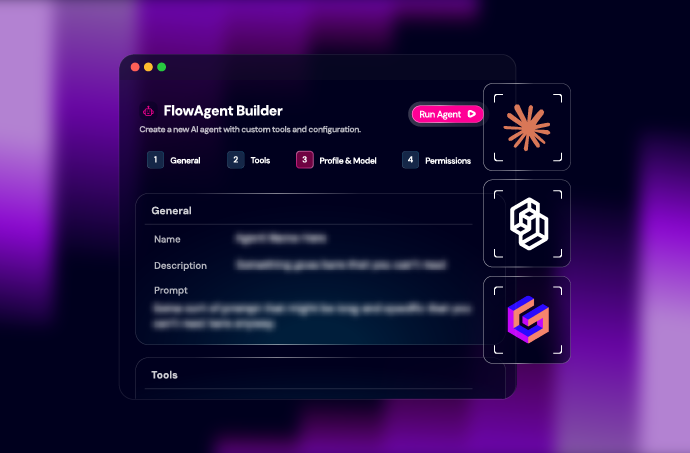
FlowAI is the agent harness of the Itential Platform. The model registry lets me bring my own models and choose which one each FlowAgent uses based on the job I’m asking it to do. In this build, I used Opus to coordinate, Sonnet to investigate, plan, execute, and validate, and a locally hosted Gemma model to handle communications.
I don’t need the same model doing all of that work. I can match the model to the task, including where it runs and what it costs, while FlowAI provides the tool access, agent coordination, and execution records around it.
Jev adds another specialized capability through MCP: evaluating whether the work should proceed and whether the result should be accepted.
There’s an architectural detail here that I want to be clear about, especially if you watched the Antares walkthrough.
Claude and my local Gemma model were configured through the FlowAI model registry. Gemma ran through Ollama in my local Docker environment. The Claude models were accessed through their cloud service.
Jev took a different path. I wrote a TypeSafe Jev Model Context Protocol (MCP) wrapper and connected it through Itential Gateway. The coordinator called Jev as a tool.
So this build combined registered models with a specialized decision API exposed through MCP. Cloud services, local models, and network tools all had roles in the same operation.
That gives me room to experiment with a new model based on what it actually does and the interface it provides. In this case, I wanted Jev evaluating decisions inside a system I was already building with FlowAI.
The First Run Was Rejected
The investigator gathered the baseline from all four devices. Jev reviewed the evidence. The planner generated proposed configurations and a verification plan. Jev reviewed those proposals too.
Then the plan came to me in Work Center. I could inspect the commands, the checks we expected to run, and Jev’s assessments before approving execution.
After approval, the executor applied the configurations. It collected fresh device state and ran the tests.
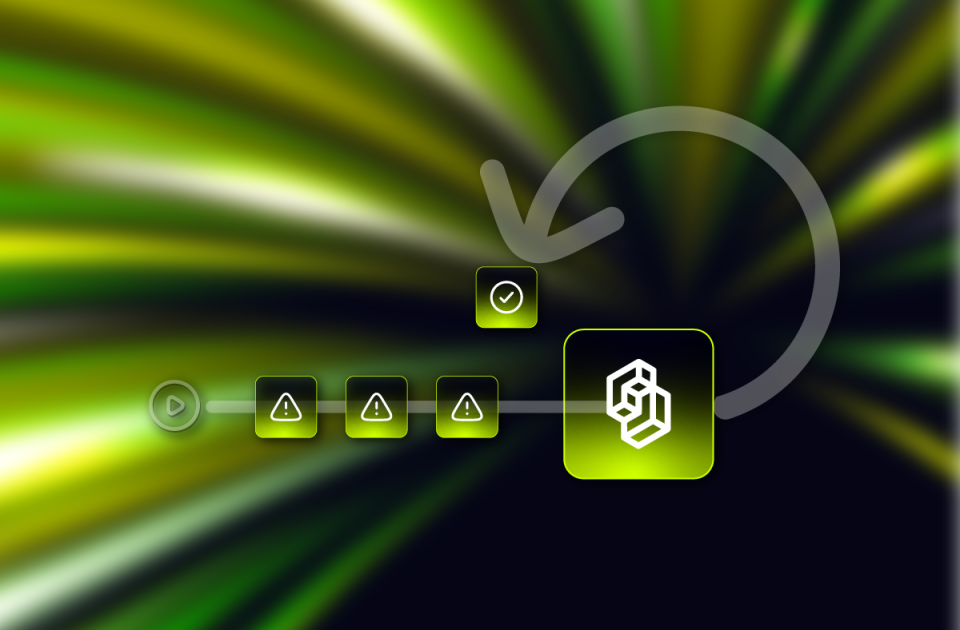
Some early pings failed. Later pings succeeded as the network settled. But the execution result still included three failed checks out of 14, and the coordinator submitted that result to Jev.
Jev rejected it and initiated the rollback path.


 Build Build agents & workflows visually, with AI, or bring your own.
 Integrate Connect every system, tool, agent, & AI in your stack.
 Execute Execution for agentic & deterministic operations.
 Secure & Govern Govern every action with built-in RBAC, audit & approval gates.
 Operate Self-service operations & real-time visibility.









 Agentic Operations Connect AI to infrastructure for trusted, automated actions.
 Infrastructure Modernization Transform legacy networks into modern, AI-ready infrastructure.
 Infrastructure as a Product Deliver network and infrastructure services on demand - self service, governed, & consumed like cloud.
 Hybrid & Multi-Cloud Orchestration Unify hybrid & multi-cloud infrastructure through agentic orchestration.
 Unified Change Management Unify network & infrastructure changes across every team, tool, & domain.