The GitOps Patterns Were the Answer All Along
Here’s the thing that took me a while to internalize: the industry already solved this problem. Just not for us.
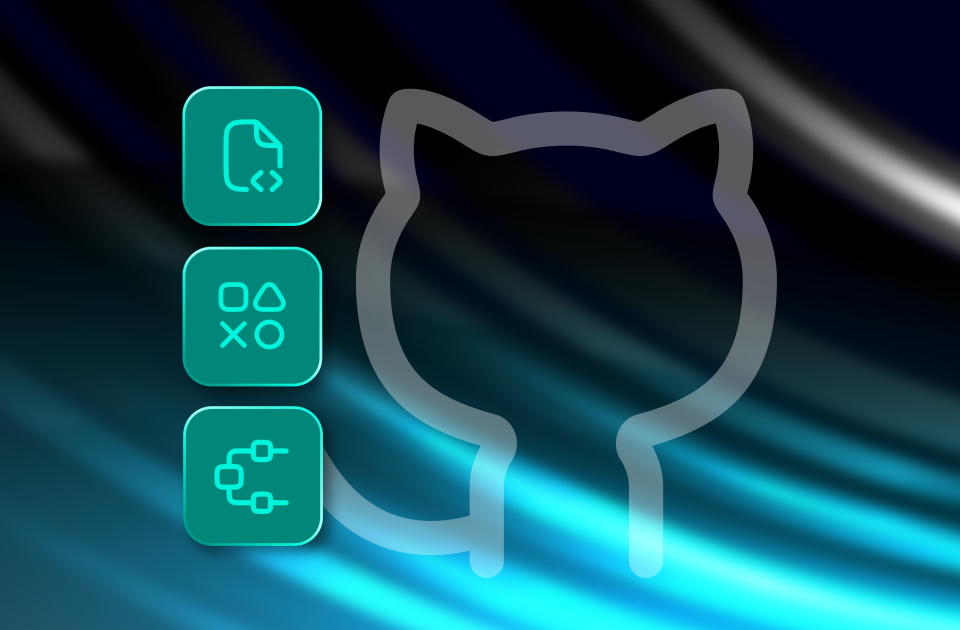
The GitOps principles that fixed application delivery were never application-specific. Git as the source of truth, declarative configuration, ephemeral environments, promotion by merge: they were just proven there first. They’re exactly what infrastructure automation execution needs. Call it git-native execution.
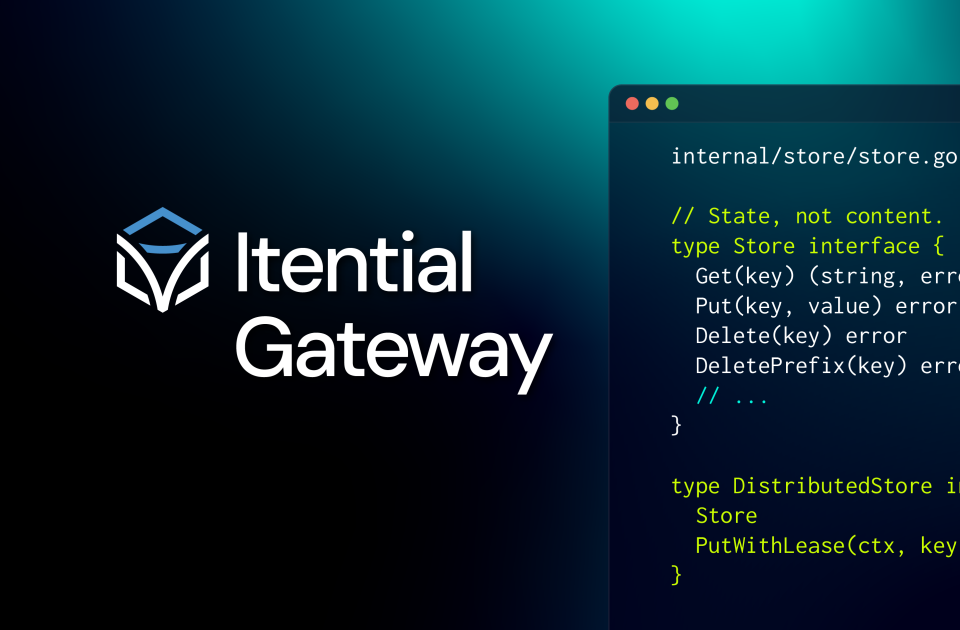
This is the thinking behind Itential Gateway 5 – our execution engine, the thing that actually runs your playbooks, scripts, and OpenTofu plans against real infrastructure. And it’s why I’d describe it less as a product with features and more as a set of deliberate design decisions.
Content Lives in Git
Gateway 5 stores nothing about your automations. Your playbooks, scripts, and OpenTofu plans stay in your repositories, and the gateway pulls them at execution time. There’s no staging, no copying files to servers, and nothing to synchronize when you add capacity.
Dependencies live in requirements files right next to the code, and the gateway builds a clean, ephemeral environment for every execution. Run the same playbook against 500 devices at once and every run is isolated. The works-on-my-machine problem doesn’t get solved so much as it stops being possible.
GitOps Is the Architecture, Not a Bolt-On
Every gateway resource is described in declarative files you version alongside your code. Promotion from dev to stage to prod is a merge, not a rebuild. Your pipelines run the gateway. The gateway does not run you.
There Is No Web UI, On Purpose
This is the one that raises eyebrows, so let me say it plainly: a UI on an execution engine is an attack surface, a separate deployment to maintain, and a standing invitation to manage servers by hand. Gateway 5 is built for lights-out operation. Nobody logs into a gateway server in production. Administration happens through a CLI built for pipelines, and visibility lives in the platform where it belongs.
mTLS, Not VPN Tunnels
The gateway dials out to the platform over WebSocket secured with mutual TLS, where both ends of the connection authenticate each other with certificates. No inbound firewall rules, no site-to-site tunnels, no six-week ticket with the security team just to connect a site. Workflow-to-service trust instead of network-to-network exposure.
Individually, none of these decisions is exotic. That’s the point. They’re the same decisions your application platform made years ago. Execution is just the last layer to get the memo.

 Build Build agents & workflows visually, with AI, or bring your own.
 Integrate Connect every system, tool, agent, & AI in your stack.
 Execute Execution for agentic & deterministic operations.
 Secure & Govern Govern every action with built-in RBAC, audit & approval gates.
 Operate Self-service operations & real-time visibility.








 Agentic Operations Connect AI to infrastructure for trusted, automated actions.
 Infrastructure Modernization Transform legacy networks into modern, AI-ready infrastructure.
 Infrastructure as a Product Deliver network and infrastructure services on demand - self service, governed, & consumed like cloud.
 Hybrid & Multi-Cloud Orchestration Unify hybrid & multi-cloud infrastructure through agentic orchestration.
 Unified Change Management Unify network & infrastructure changes across every team, tool, & domain.