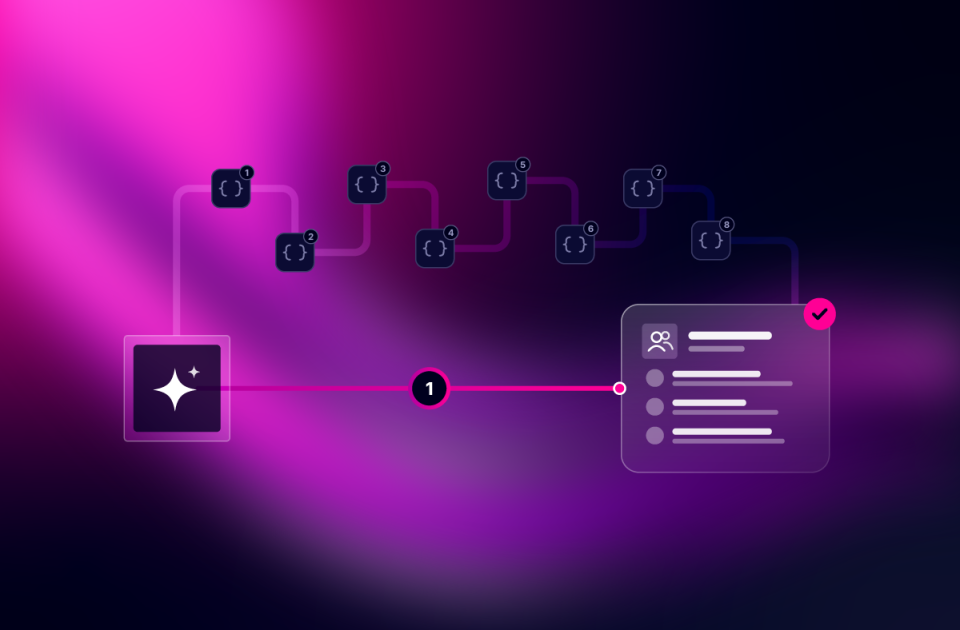
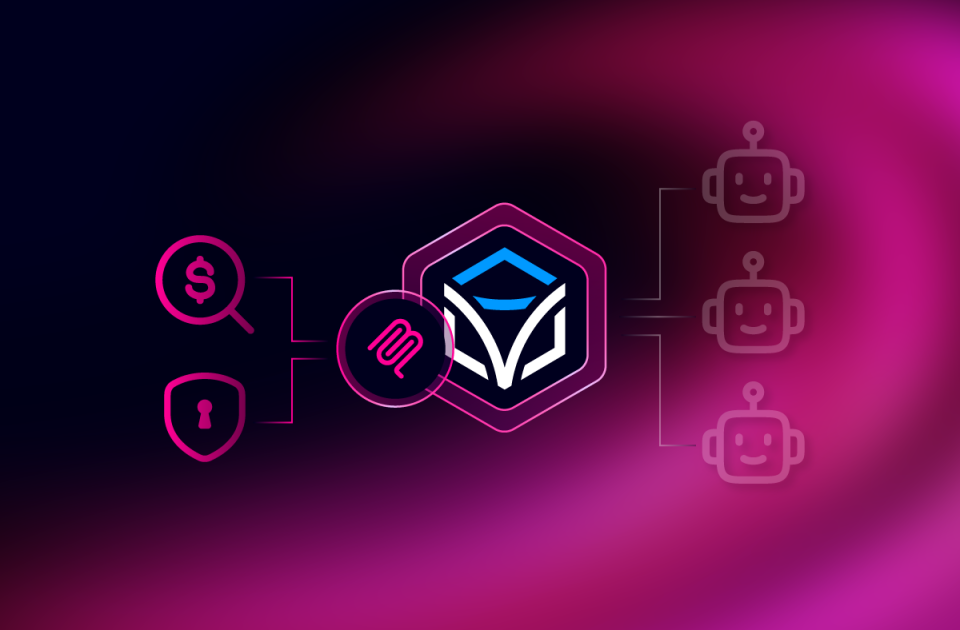
How the three compare on that same question (qualitative, not measured):
| Type | Tool calls (illustrative) | Agent reasoning on intermediate output | Tokens wasted on intermediate payloads |
| 1: 1:1 API mapping | High (e.g. 8) | High | High |
| 2: Semantic search | Medium (e.g. 3+) | Medium | Medium |
| 3: Agentic abstraction | Low (e.g. 1) | Low | Low |
Where We Go From Here
I don’t think anyone set out to ship Type 1. It’s what happens when generating a server takes four lines and designing a good one takes real thought. Incentives did the rest. “We have an MCP server” is a checkbox, and a generated server checks it.
If we want better, here’s where I’d start.
For Vendors & Platform Teams
- Start from the question, not the endpoint list. Before you write a tool, write down the five things a user would actually ask an agent to do. Build those tools. Everything else can stay behind the API.
- Do the joins server-side. If answering a question takes three calls and two ID lookups, that’s your tool’s job, not the agent’s.
- Measure turns and tokens. Count how many tool calls and how many tokens it takes to answer a real question. If you aren’t measuring it, you won’t improve it.
- Treat tool descriptions as product surface. The model reads them the way a developer reads docs. Write them like it.
- Keep the generator, change the role. Auto-generating from OpenAPI is a fine starting point and a fine escape hatch. It shouldn’t be the finished product.
For the Industry
We need a shared vocabulary for this. Something like a maturity model that says “this server maps endpoints,” “this one searches,” “this one exposes outcomes,” so buyers and builders can tell the difference before they’ve burned a week finding out. The same goes for public benchmarks that score a server on turns, tokens, and task success instead of tool count.
Where Open Source Can Help
Open source is well placed to close this gap, because the gap is mostly patterns, not proprietary technology.
- Composition layers that let you define an outcome-level tool on top of a generated one, so you can start from the OpenAPI output and curate your way up instead of rewriting from scratch.
- Workflow descriptions that live next to the API spec. The OpenAPI Initiative’s Arazzo spec, which describes multi-step API workflows, looks like a natural fit for deriving outcome tools from a sequence of calls.
- Reference servers and eval harnesses that show the same system exposed as Type 1, Type 2, and Type 3, with turn counts and token costs side by side. Nothing persuades like a diff.
- Shared, community-maintained tool designs for common infrastructure and networking systems, so every vendor doesn’t have to rediscover that “who has access?” should be one call.
What You Can Do This Week
Pick one MCP server you use or run. Ask it the most common real question you’d put to it, and count the tool calls. As a rule of thumb, if it takes more than two calls, you’ve found your first outcome tool.
Takeaway: Design MCP tools around the outcome the agent needs, not the endpoints you happen to have.
👉 Explore the guide on 78 Essential MCP Servers for AI-Driven Network Automation
👉 Learn more about the Itential MCP Server


 Build Build agents & workflows visually, with AI, or bring your own.
 Integrate Connect every system, tool, agent, & AI in your stack.
 Execute Execution for agentic & deterministic operations.
 Secure & Govern Govern every action with built-in RBAC, audit & approval gates.
 Operate Self-service operations & real-time visibility.








 Agentic Operations Connect AI to infrastructure for trusted, automated actions.
 Infrastructure Modernization Transform legacy networks into modern, AI-ready infrastructure.
 Infrastructure as a Product Deliver network and infrastructure services on demand - self service, governed, & consumed like cloud.
 Hybrid & Multi-Cloud Orchestration Unify hybrid & multi-cloud infrastructure through agentic orchestration.
 Unified Change Management Unify network & infrastructure changes across every team, tool, & domain.